
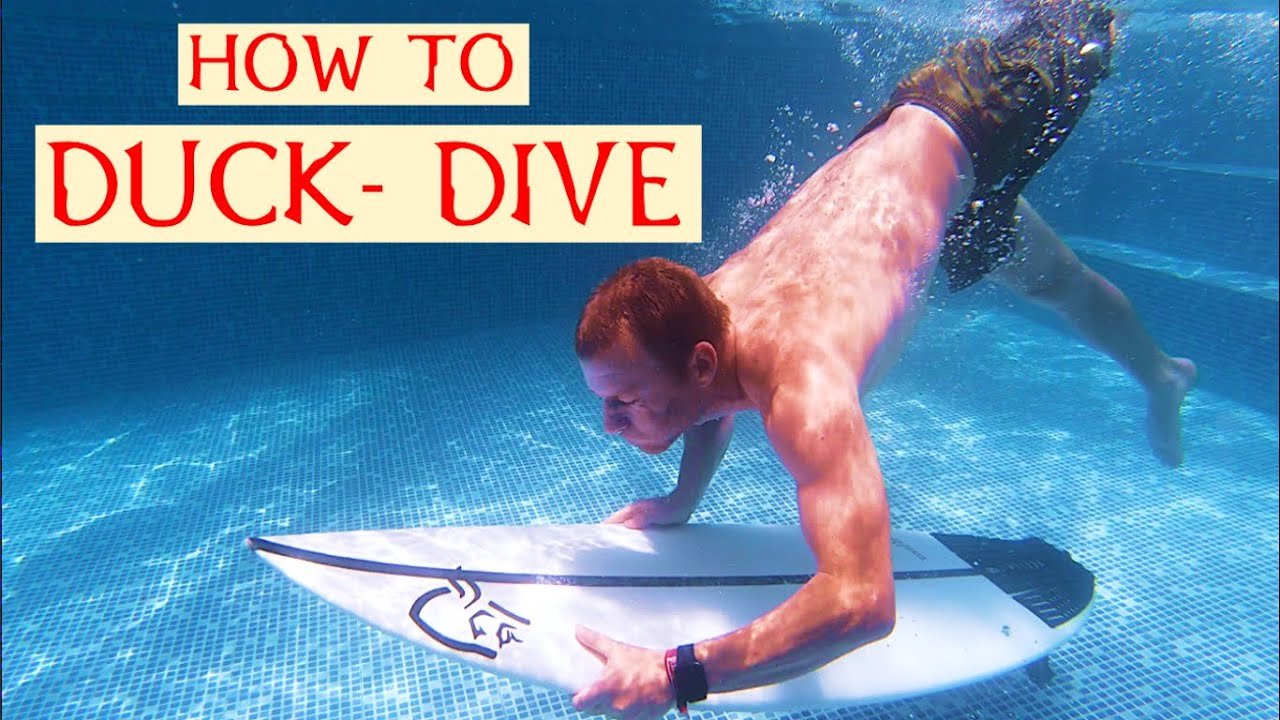
This tutorial breaks down the duck dive, showing the most common mistakes and the simplest, most effective technique to improve. The main goal is to be able to get underneath and past the wave without the wave putting you back and dragging you.
Key Takeaways & Tips
Main Goal
The main goal of duck diving is to be able to get underneath and past the wave without the wave putting you back and dragging you.
Foot Dive Technique
The most effective way is the foot dive: you sink the nose of the board a little bit first, and then the tail a second later. You must keep weight and pressure on the tail for as long as possible to go deep enough underneath the wave.
Press Up Analogy
The action is like a push-up or press-up, getting the rear up and keeping weight and pressure on both your hands and the one foot. This helps you to kick the tail down with the other foot.
Timing
Timing is important: you want to be able to sink the nose and the tail deep enough and early enough—just before the wave gets to you—to get underneath the wave in time.
The Exit
When you finish the duck dive and come up underneath the wave, you should come nose first and tail second. When done correctly, you are able to generate speed and project forward.
Common Mistakes to Avoid
Tail Sticking Up
The most common mistake is failing to get the tail of the board deep enough. If the tail sticks out, the wave will grab it and pull you back, preventing you from getting far too quickly.
Knee Dive
Using your knee to push the board down does work, but you do not go deep enough underneath the wave, making it less effective in larger surf.
Too Late
Ducking diving too late will prevent you from getting underneath the wave in time, causing you to get caught and pulled back by the wave’s energy.
Taking Foot Off Too Early
Taking the foot off the tail pad too early means you lose the pressure needed to keep the tail down, and the wave will grab the tail and pull you back.