
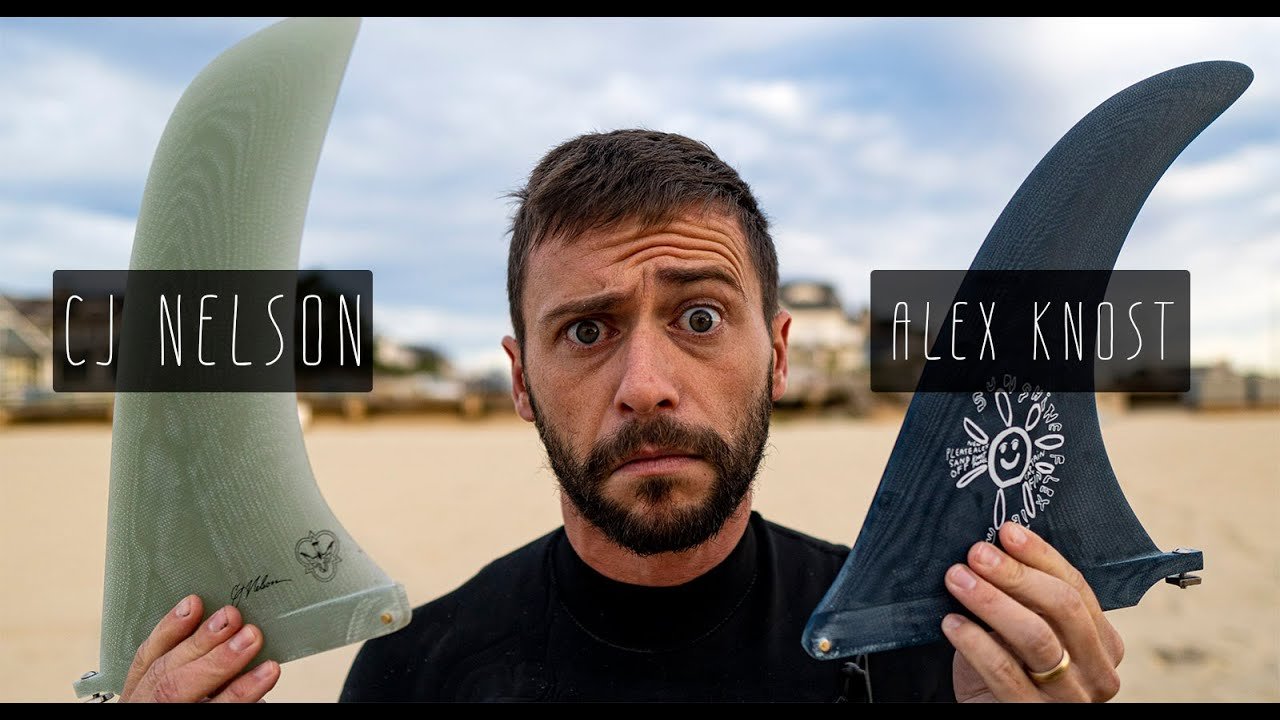
Does fin type really affect longboard surfing performance? This video tests two dramatically different 10-inch single fins—the flexible Alex Knost model and the large, stable CJ Nelson Nose Rider—to see how much stability changes the board’s feel and behavior.
Key Takeaways & Tips
Alex Knost Fin (Flexible)
This fin feels loose and lively, with tons of side-to-side movement. It makes turning and stalling a breeze. The board turns easily, even when standing in the middle of the board, but requires precise cross-stepping.
CJ Nelson Fin (Stable)
This fin feels like cross-stepping on a boat—it is extremely stable and makes the board feel heavier when paddling. The downside is that you must have your back foot as close to the fin as possible to turn, unlike the Knost model.
Stability vs. Speed
The difference between the two fins highlights how a small adjustment can have a huge impact. The Knost fin is excellent for looseness and turning, while the Nelson fin provides unparalleled stability and anchor for cross-stepping.
Diagnosis Tool
The looser fin is helpful for self-diagnosing cross-stepping errors, as any step off the center line will cause the board to bobble, immediately revealing your mistakes.
Common Mistakes to Avoid
Assuming Subtlety
Assuming that you need to be a great longboarder to feel the difference a fin makes. The test shows that fin size and shape can dramatically change the whole feel of the board, which is easily felt by any surfer.
Turning from the Middle (Stable Fin)
Trying to turn a large, stable fin while standing in the middle of the board. This will not work; the board requires the rider to anchor the weight over the fin to gain leverage and turn.