
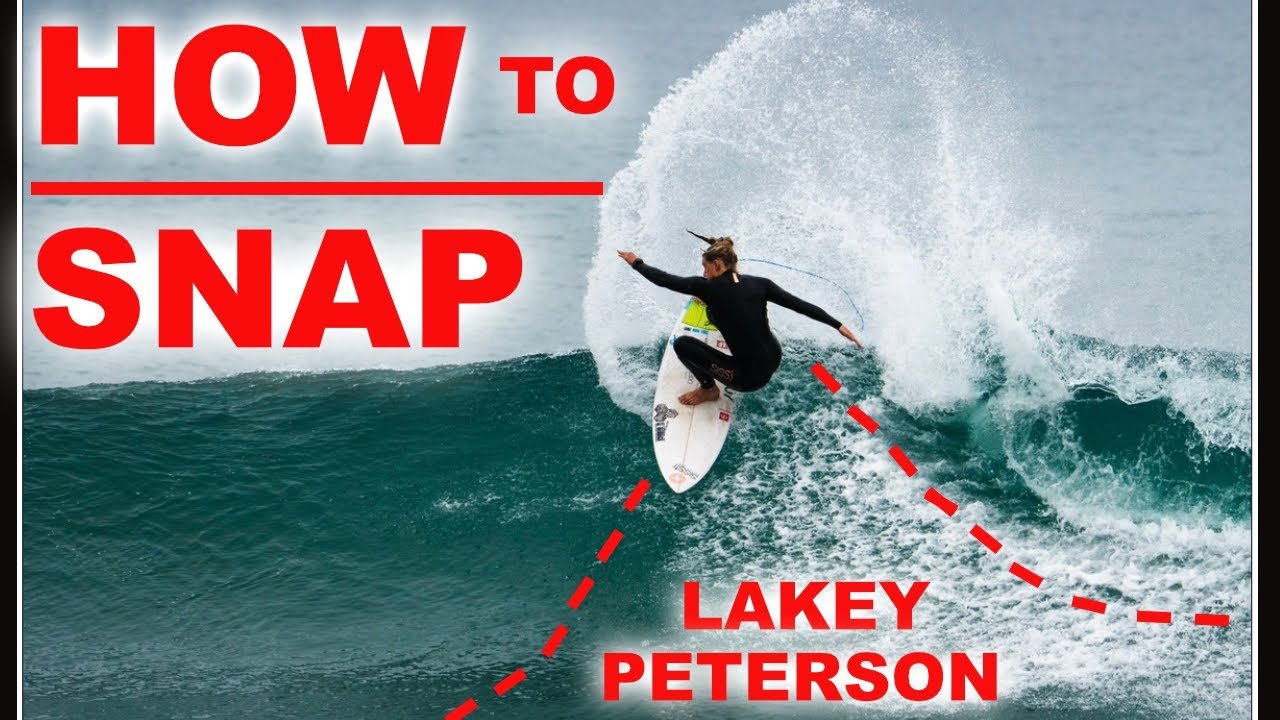
Lakey Peterson breaks down the frontside snap, covering three variations: the speed snap, the regular vertical snap, and the closeout section end turn. The tutorial emphasizes creating good habits, coiling the back arm, and using the unique “karate kick” technique to blow the tail out while maintaining balance through counter-rotation.
Key Takeaways & Tips
Snap Variations
The three types covered are: the speed snap (transitional maneuver for speed), the regular snap (vertical and the main focus), and the Critical snap (12 o’clock/fin release). All require a lip to hit.
Speed Snap Entry
For a speed snap, use a shallower bottom turn, starting a little bit higher up on the wave. The board angle should be around 10:00 or 11:00 (not vertical) to keep down-the-line momentum moving forward.
Coiling the Back Arm
On the bottom turn, throw your back arm back (coiling it) to load yourself up, which allows you to twist, look up toward the lip, and project up the face.
The “Karate Kick”
The back leg kicks straight out (like a karate kick), pushing off the tail and sending spray, while the front knee sucks in (flexion) to rotate the board around the pivot point. The power and tail release come from this action.
Balance and Counter-Rotation
When twisting the hips for the snap, you must counteract the twist with your upper body. Your arms (called “beach ball arms” when held overhead) guide the turn and help maintain balance.
Closeout Snap Advantage
On a closeout, you can push really hard into the turn because the oncoming section is pushing back at you, allowing you to maximize the power of the kick and ride out cleanly.
Common Mistakes to Avoid
Going Too Vertical (Speed Snap)
For a speed snap, going straight up (to 12:00) wipes off too much speed and momentum, preventing you from continuing down the line.
Failing to Unweight/Straighten Legs
After coiling, the legs must straighten (unweighting) as you approach the lip. Failing to do this limits the explosive power needed for the snap.
Not Using Body Coil
If you do not wind up the back arm on the bottom turn, you miss the opportunity to load and torque the body, resulting in a weak, non-projecting snap.