
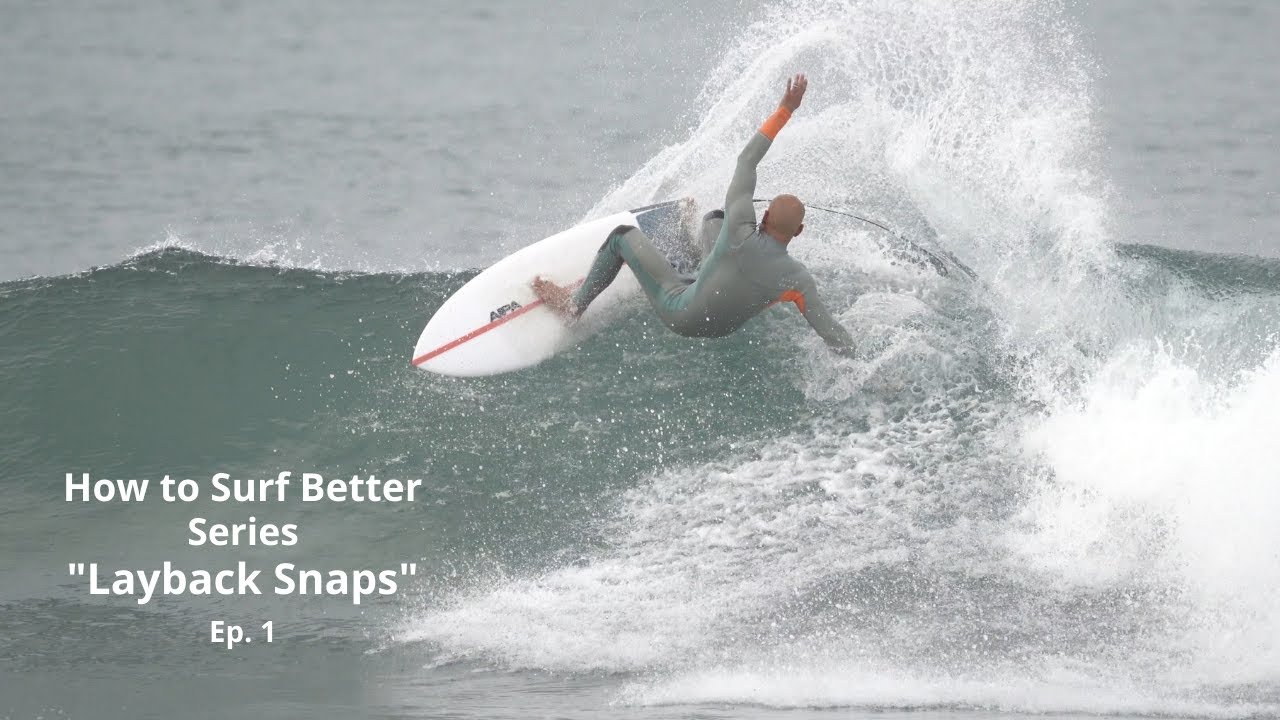
This tutorial, Episode 1 of the Layback Snaps series, breaks down the move as a variation of the frontside snap that incorporates more flair and power. The key mechanics focus on creating maximum coil with the trailing arm, shifting weight back to initiate the snap, and using the heels to pull the board back under the hips for a strong recovery.
Key Takeaways & Tips
Snap Initiation Weight
You must initiate the layback snap with 60% of your weight on your **back leg** and 40% on your front leg. This sets the heel side rail and allows you to lay back [10:13].
Creating Extra Coil
When you put your **trailing arm** in the water, the action causes your shoulders to rotate, which creates extra twist and torque compared to a regular snap, allowing the hips to rotate and release more power [9:04].
Bottom Turn Setup
Initiate the bottom turn about one foot below the lip. This accounts for the slight delay in the transition from the toe side rail to the heel side rail, ensuring the fins hit the lip at the right moment [7:59].
The Board Recovery
As you push off the board with your back foot, your **front leg** is coming back towards the power source, bringing the board back under your hips by using your **heels** to pull it back under your feet. This is how the board recovers [10:38].
Attack the Steepest Part
It is imperative to attack the lip in the **steepest part of the wave**. This makes it easier to pull the board back under your feet and easier to lay back, as the wave is closer to you at the top [11:13].
Layback Carve Practice
Practice with a laid-back carve, initiating the turn at the top of the wave and leaning back to get the feel of putting your hand in the water. This helps you get into the motion of the layback snap [12:30].
Common Mistakes to Avoid
Back Foot Placement
Failing to get the back foot all the way back on the tail block or kick before the bottom turn prevents you from achieving nice, precise turns.
Not Loading the Coil
If the back shoulder is not loading and twisting during the bottom turn, you will lack the coil that is about to be unloaded in the snap, resulting in a weak maneuver.
Doing the Snap on Flat Wave Face
Doing the layback snap out on the flatter part of the wave face eliminates the wave’s push, making it much harder to pull the board back up and complete the maneuver.