
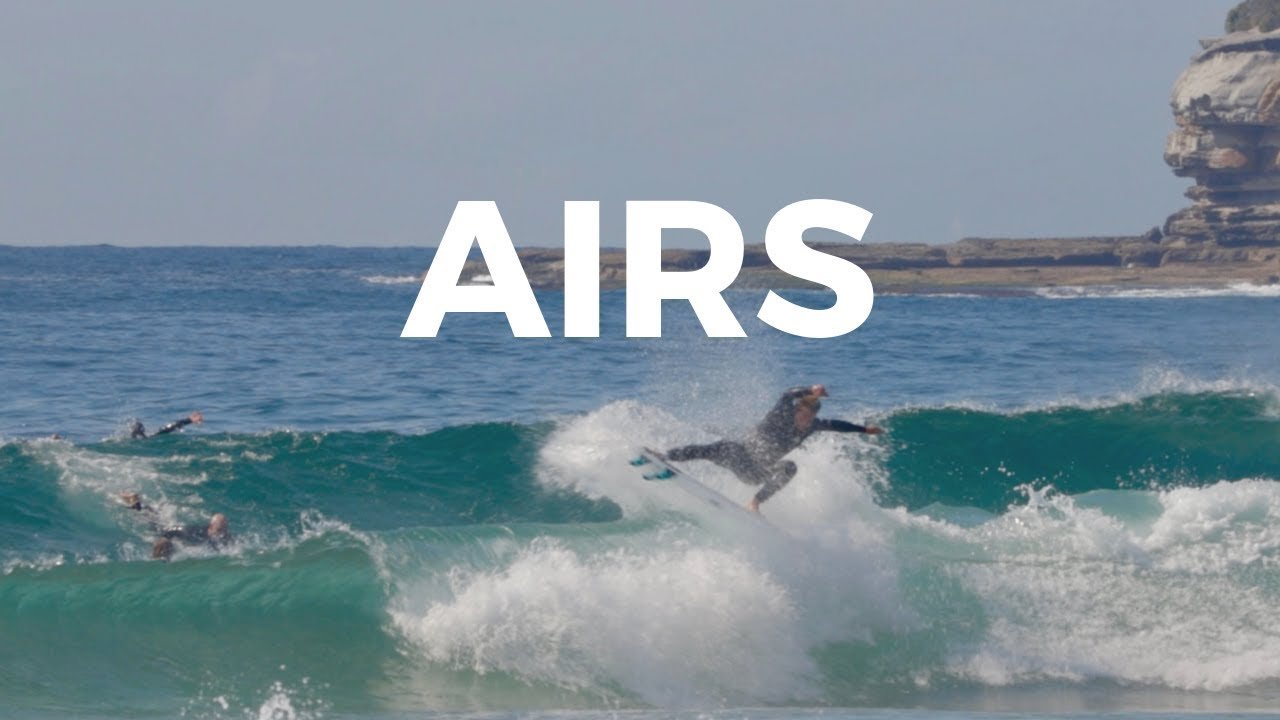
This tutorial breaks down the core principles of performing an aerial maneuver, emphasizing that air tricks are within reach even for non-professional surfers. The two most important factors for success are projection and the landing, both of which require speed and confidence.
Key Takeaways & Tips
Projection (Speed & Targeting)
Projection is a blend of speed, targeting the lip, and your physical disregard for the laws of gravity. You must lift and will your body upward but also **toward the beach**, because the wave is continually moving in that direction while you are in the air.
Bottom Turn Setup
Perform a shallow bottom turn on your way up to the lip. This maximizes projection, speed, and momentum, which is necessary to overcome the inertia of your coiled spring position.
The Landing
Upon landing, maintain a **softer position** so that the knees bend, ankles and feet adapt, and the center of gravity is lowered. Ideally, the nose of the board lands first, allowing for a softer rotation upon impact.
Finding the Section
You need to find a lip that is steep but not too steep. A section that is too soft will not allow you to project out of the wave, and a section that is too steep will result in you landing too hard and risking injury. The section often never arrives, so you must be ready to boost when the opportunity presents itself.
Common Mistakes to Avoid
Going Straight Up
If you go straight up in the air without projecting toward the beach, you risk landing off the back of the wave.
Landing with Straight Legs
Landing with straight legs risks injury to yourself and your board. You must land softly in a compressed position.
Hitting the Lip Too Early
Hitting the lip too early will cause you to hit a soft section where you don’t actually get in the air.
Rotational Airs
On rotational airs, the biggest challenge is that the surfer often takes their eyes off the water, losing the spot where they need to land.