
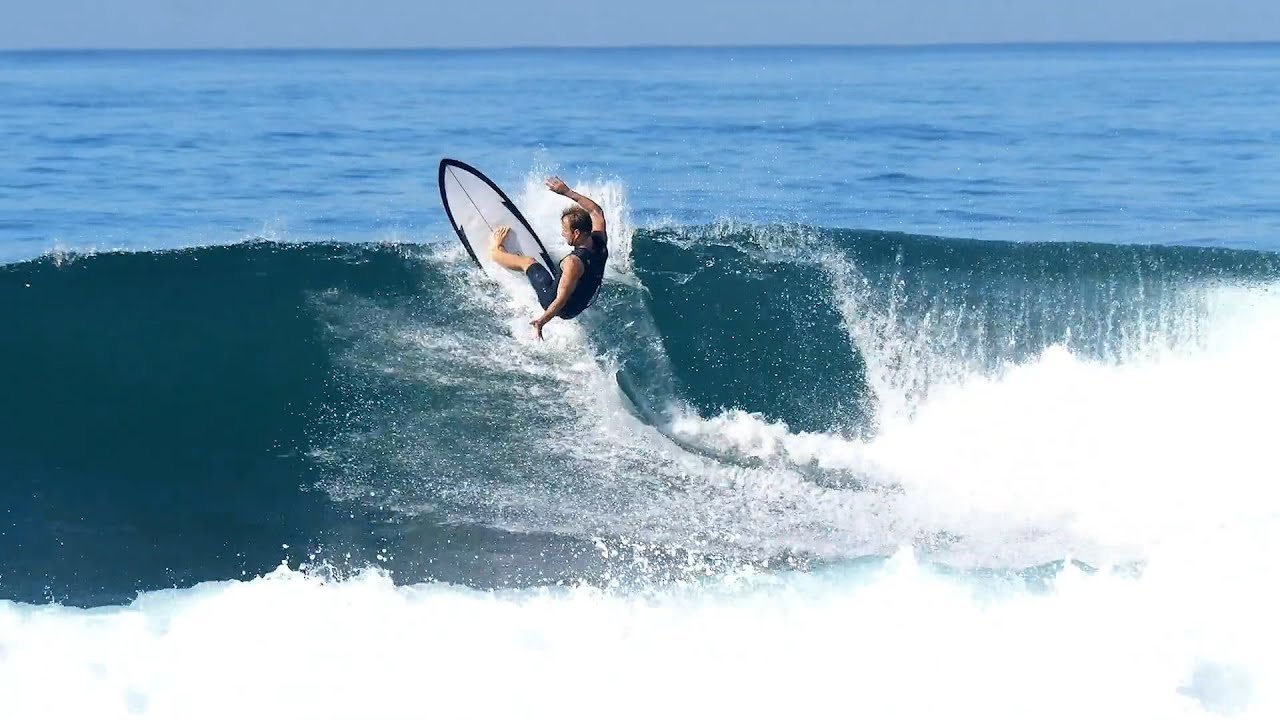
Pro surfer Josh Kerr breaks down the frontside re-entry, showing the key techniques to master the transition phase and gain confidence in finishing the maneuver strong. The re-entry is a dynamic top turn that allows for great style, maneuverability, and spray when executed correctly.
Key Takeaways & Tips
Step 1: Positioning and Eye Placement
The entire maneuver is set up by your bottom turn. Your eyes should be looking at the section you want to hit. To get tighter into the lip, keep your head turning and look into that part of the wave during the bottom turn.
Step 2: Arm Positioning and Pivoting
As the board comes up to the lip, your back arm must start coming across your body. This helps the board pivot. You need to get your arms slightly ahead of your board’s rotation to help bring your momentum back into the wave.
Step 3: Body Adjustment and Spray
To maximize spray and power, you must extend your body (pushing your feet into the board) and lift your arms up. This gets your body more upright and pushes the board away from you, maximizing the water displaced.
Step 4: Confidence and Landing
After the explosion, you must be confident to bring yourself back into the wave. Compress down low as you ride out to absorb the landing and keep the board from losing control.
Transition Time
The most crucial element is gaining more time in the transition to the maneuver. Focus on controlling your approach and the pivot so you can cruise into a clean re-entry.
Common Mistakes to Avoid
Closing the Front Arm
If your front arm remains closed and does not swing out of the way, you limit the room to move through the maneuver and cannot complete the pivot.
Failing to Look Away
Failing to look down the wave (away from the lip) as you hit the re-entry will cause you to stall or fall over the back of the wave.
Lack of Bottom Turn
If your bottom turn is not strong, you will not have the power and speed needed to project your board vertically up the face to hit the re-entry section.