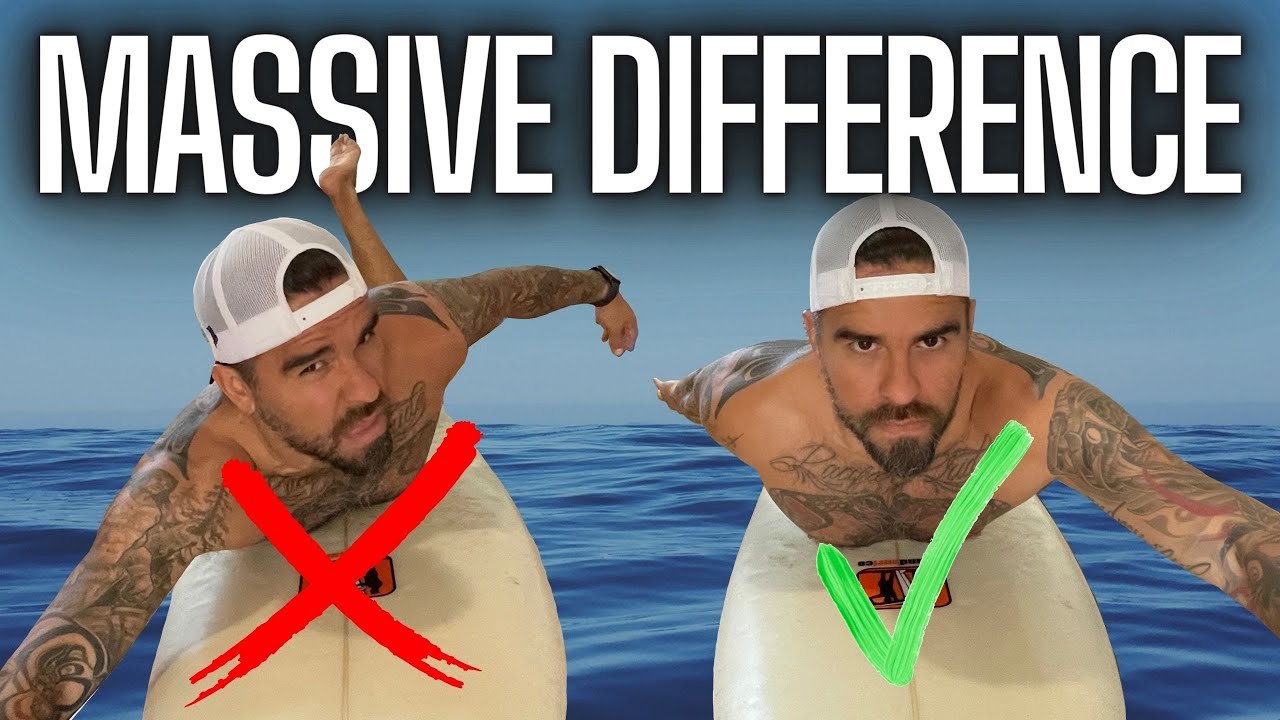
This tutorial breaks down the proper technique for paddling, emphasizing that paddling is a very specific skill that is easy to do wrong. By eliminating bad habits and using minimal muscle, you will add tons of efficiency to your stroke, allowing you to glide further with less effort and catch more waves.
Key Takeaways & Tips
Musculature and Efficiency
Proper paddling technique uses minimal muscle and minimal movement. The goal is to use the primary paddle muscles and avoid using “compensation muscles” (other parts of the body squirming to force movement).
Posture
The posture must be flat and straight: the spine should remain straight and the shoulders should remain flat (not rocking back and forth). The head should be up, not down, and the gaze must be forward.
Leg Position
Keep your legs and knees together and your toes pointed. The legs should not be twisting or kicking, as this is a compensation muscle.
Stroke Goal
The only thing that should be working is below the shoulders. It should be a quiet movement where the stroke is done with the muscles on the back of your arm and under your armpit.
Board Positioning
Aim for the sweet spot, where the nose is just slightly above the water (a couple of inches). If the nose is going underwater, or if the nose is too high, you are creating drag. Adjust the board’s plane by shifting your weight.
Power Stroke vs. Travel Stroke
There are two strokes: the Travel Stroke (conserves energy) and the Power Stroke (used just before catching a wave). The Power Stroke has a longer reach and a deeper path, often coming alongside the board rather than out to the side.
Common Mistakes to Avoid
Compensation
Using compensation muscles (twisting, pulling, squirming) indicates your main paddle muscles have burned out. This exhausts your body and requires much more oxygen.
Head Down
A dropping head is a sign of being tired or a beginner. This adds pressure to the chest, reduces stroke length, and slows you down.
Tension
When tired, surfers tense their entire body (flexing face, neck, legs, and core). This rigidity works against the body. Only use the muscles you need, and let the rest go limp.
Too Far Back
Laying too far back on the board lifts the nose too high, causing you to plow through the water and slowing you down.