
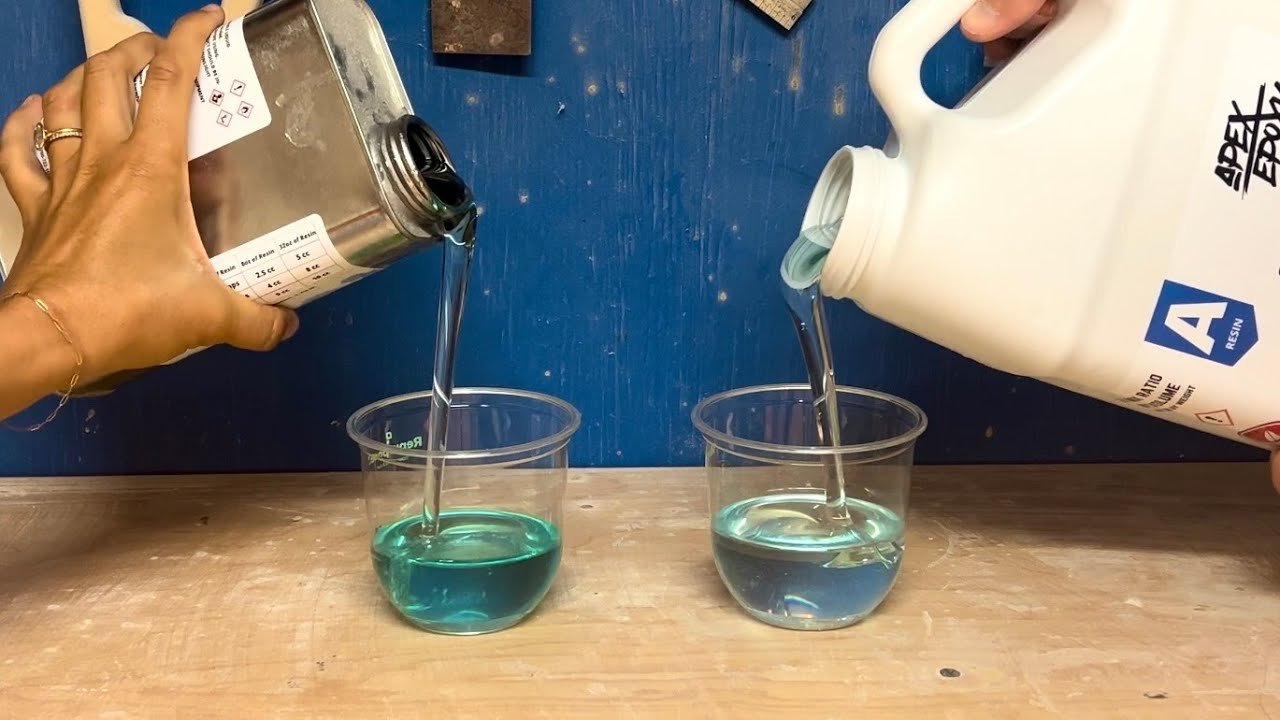
The choice between polyester (Poly/PU) and epoxy resin is a source of controversy, but the data shows clear differences in performance, durability, and toxicity. The best choice depends entirely on your project needs: speed/cost or durability/flex.
Key Takeaways & Tips
Brittle and Flex
Poly resin is more brittle and stretches less, causing it to break and shatter easier than epoxy. Epoxy has better flex and is significantly more durable, only developing small, almost invisible cracks under stress.
Cure Time
Poly cures much faster (about 8 hours), which can be an advantage for production speed but risks precision on complex projects. Epoxy is slower to cure (about 24 hours), which is better for complex layups requiring more working time.
Toxicity
Poly is more toxic to the user (shaper/laminator) and the environment. Epoxy is less toxic, and although not perfect, its risks are easier to minimize, making it a definite improvement.
Impact Resistance
Epoxy absorbs energy better than poly, giving it superior impact and dent resistance. This is why epoxy is more durable, though the foam core (EPS vs. PU) is the primary factor in dent size.
Cost and Waste
From a price perspective, poly is cheaper. However, because the working time for poly is so fast, more resin is often wasted, meaning the true cost difference between the two may be closer than it seems.
Common Mistakes to Avoid
Ignoring Durability
Choosing poly for cost when durability is needed. Poly is brittle and breaks easier, while epoxy’s superior flex makes it the only choice for a durable, long-lasting board.
Assuming Ease of Use
Assuming poly is always easier to use. While poly is simpler, its short working time makes complex layups challenging. Epoxy’s challenge is that impurities (dust, oil) cause non-adherence (fish eyes).