
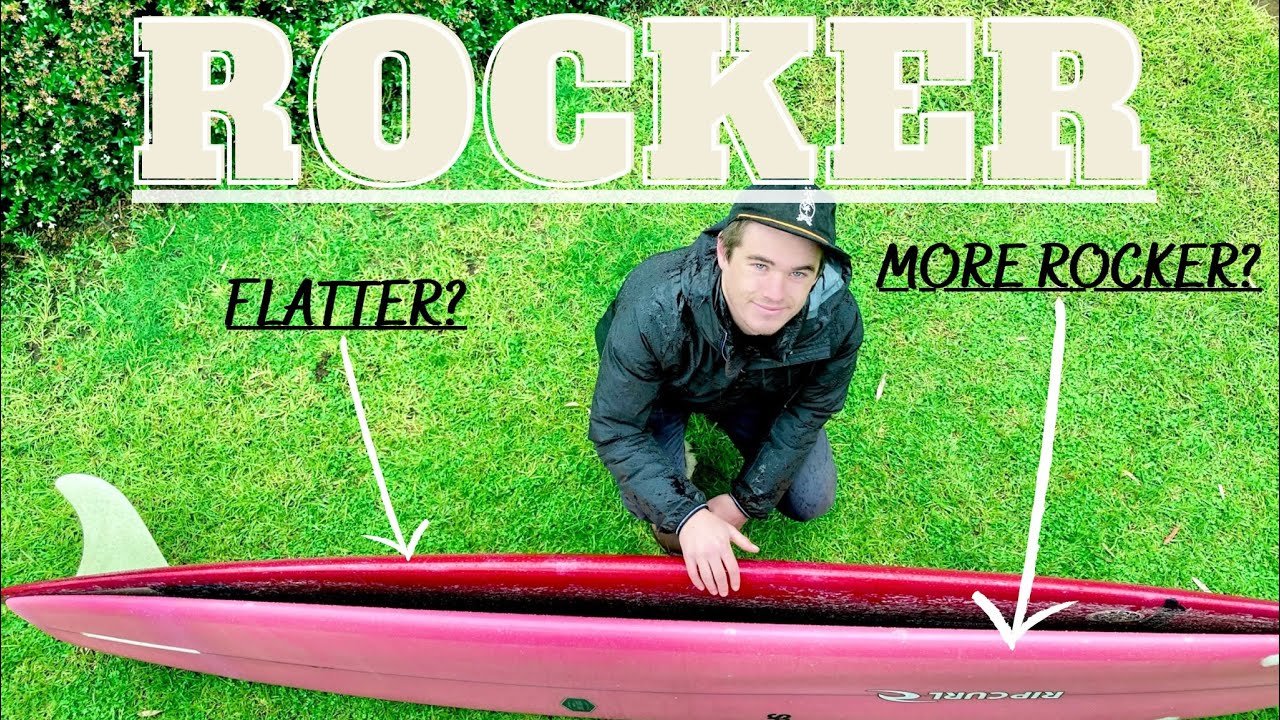
Longboard rocker is one of the most influential aspects of longboard design, greatly affecting performance. This tutorial breaks down the benefits of both flatter (less) and more heavily rockered (more) boards and how this translates to different surfing conditions.
Key Takeaways & Tips
Flat Rocker Benefits
Boards with less rocker maximize speed and glide because they create less drag. They maintain the wave’s speed better, which is ideal for predictable point break conditions where the wave is cleaner and steeper.
High Rocker Benefits (Safety)
Boards with more rocker are highly reliable in tricky, chunky, or unpredictable beach break conditions. The extra nose lift acts as a safety net against piercing the water, making it easier for beginners to intermediate surfers to paddle into waves and nose ride.
High Rocker Benefits (Turns)
More rocker makes turning easier, especially in slow or challenging conditions. When stepping on the tail, the rocker disengages more rail from the water, reducing the chance of bogging the rail and allowing for a quicker, sharper pivot.
Flat Rocker Turns
Flat boards keep more rail in the water, which is excellent for maintaining a hard drive during powerful, engaged turns in predictable, steep waves. However, this rail engagement makes turning difficult in slow conditions.
Quiver Advice
If you surf a variety of waves, it is worth having one of both—a flatter board for mechanical, predictable point breaks, and a more heavily rockered board for shorter, quicker waves or challenging beach break conditions.
Common Mistakes to Avoid
Ignoring Conditions
Being stubborn and only surfing a flat-rocker board in all conditions. Flat boards are challenging in closing-out, chunky, or unpredictable beach breaks, which stifles progression if you are fighting the board.
Nosediving (Flat Rocker)
Riding a flat board (no nose lift) into a critical section. The nose will pierce the water much sooner, making it trickier to adjust and prevent a nose dive compared to a rockered board.
Beginner on Flat Board
As a beginner, starting with a flatter board. The increased drag and stability of a rockered board are easier to manage and provide a better start to learning the fundamentals of turning and noseriding.