
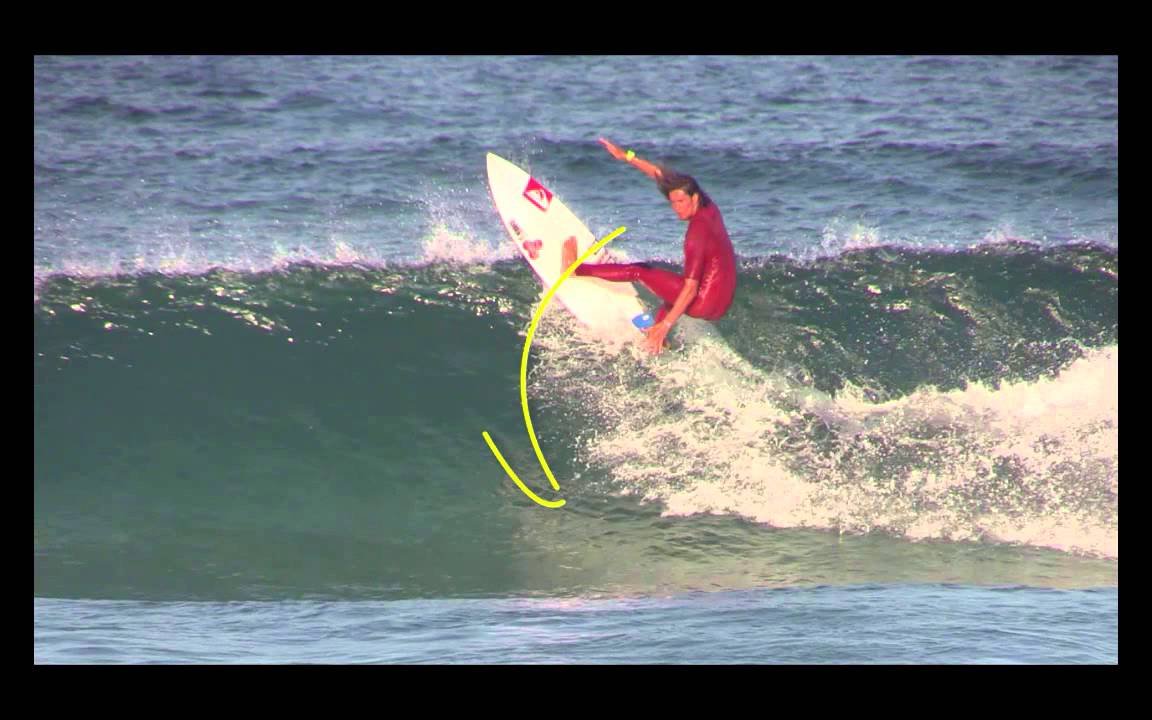
This guide from coach Martin Dunn breaks down the forehand re-entry maneuver, which is used to hit the lip of forehand waves as the surfer surfs down the line. A quality bottom turn is essential to create the drive and speed needed for a controlled re-entry off the top.
Key Takeaways & Tips
Setup
Set up the re-entry by performing a quality bottom turn which will create the drive and speed essential for a controlled maneuver off the top of the wave.
Hit Height
Hit the lip with enough height so that your front foot is above the lip on impact.
Rotation Before Impact
Before impact with the lip, rotate your shoulders and head away from the lip to create and apply a torque force to your surfboard. This action starts the turning process before you hit the lip.
Landing and Compression
Push forward and compress low over your surfboard stringer to complete the maneuver. This compression is vital for maintaining speed and control.
Vertical Success
For consistent success with vertical re-entries, the preceding bottom turn must be powerful, and the surfer must look directly above their head, rotating away from the lip more forcefully before impact [1:12].
Land Practice
The action of the re-entry can be simulated on a skateboard. When simulating, execute a good quality bottom turn simulation and turn your head and shoulders away from the lip as you get to the top to complete the simulation [1:39].
Common Mistakes to Avoid
Weak Bottom Turn
Failing to perform a quality bottom turn means you will lack the drive and speed essential for a controlled re-entry off the top of the wave.
Late Rotation
Delaying the rotation of your shoulders and head until after impact means you fail to apply the necessary torque to the board, hindering the turning process.
Insufficient Compression on Landing
Failing to push forward and compress low over the surfboard stringer makes it difficult to complete the maneuver and maintain speed.