
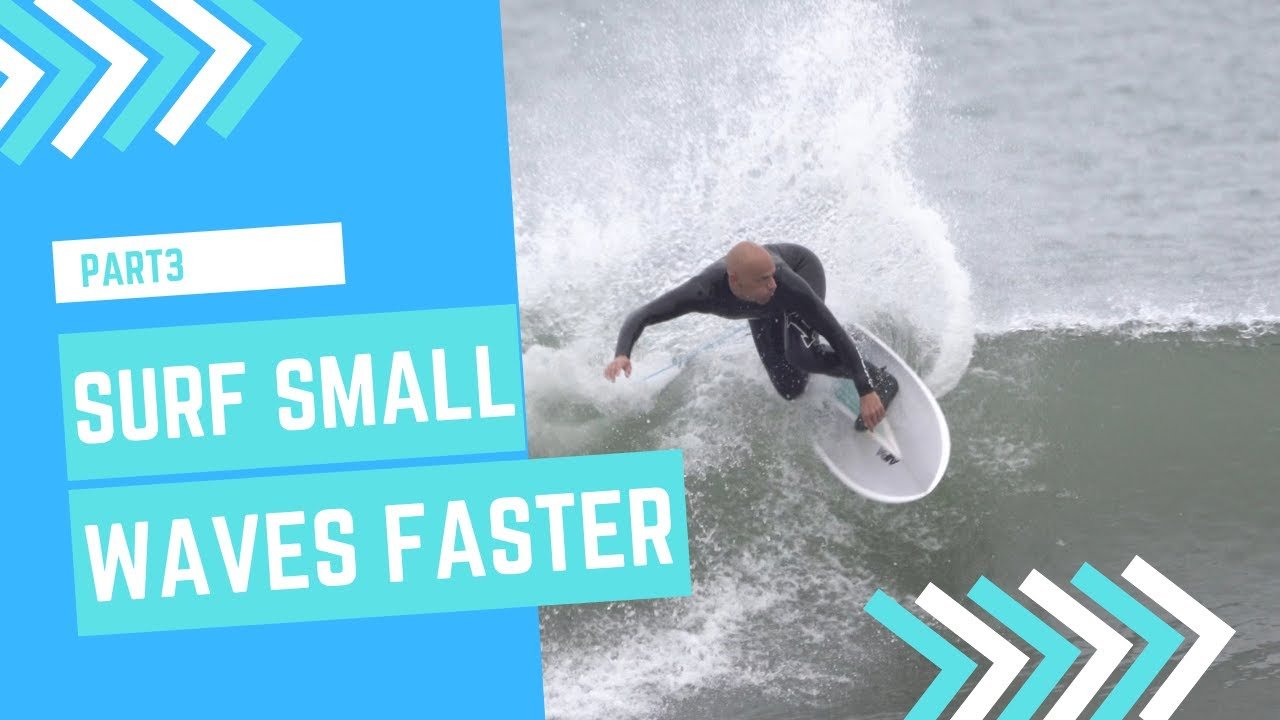
This tutorial is Episode 3 of the “Surfing Faster in Small Waves” series, focusing specifically on backside technique. The lesson covers how to approach a fast wave with an angled takeoff, maximize speed through compression and extension, and use the trailing arm to open the body for better projection.
Key Takeaways & Tips
Angled Takeoff
When paddling into a fast wave, always paddle in at an **angle** to set the board in the correct direction immediately. This is done because a fast wave leaves no time for a traditional bottom turn, which would cause the wave to pass you by.
Heelside Rail Set
When you stand up, set the heelside rail by positioning your front foot a little closer to it. This gives you something to push off of and causes the rail to settle, providing traction (resistance) for speed generation.
The Trailing Arm
Bring your **trailing arm forward** as you push off and extend to the top of the wave. This is a deliberate technique that opens your shoulders and hips so you can see everything in front of you and make better decisions, rather than surfing with your back to the entire wave [5:21].
Compression/Extension
Once at the top of the wave, you must compress down into your board to **double or triple your speed** going down. On the way down, your left knee and left shoulder should almost touch. Then, you extend up again to push off the rail [6:07].
Weight Distribution
In smaller waves, the surfer feels their weight is shifted **forward** more than frontside. The weight is about 60% on the front leg and 40% on the back leg, pushing to 70/30 when driving hard. The feet are moved closer to the heelside rail to keep the rail engaged [9:31].
Common Mistakes to Avoid
Straight Takeoff on Fast Wave
Taking off straight on a fast wave means you must immediately try to do a bottom turn, but the wave will likely be gone before you complete the turn.
Surfing with Back to the Wave
Surfing with your back to the wave the entire time limits your vision and makes it hard to see the lip or a crumbly section approaching, hindering maneuverability.
Not Compressing
Failing to compress down into the board at the top of the wave misses the opportunity to double or triple your speed going down the wave face.
Moving Back Foot Too Much
Backside, the back foot is moved around less than frontside. It is only moved to the middle of the pad to generate speed, or all the way back against the tail kick for a turn.