
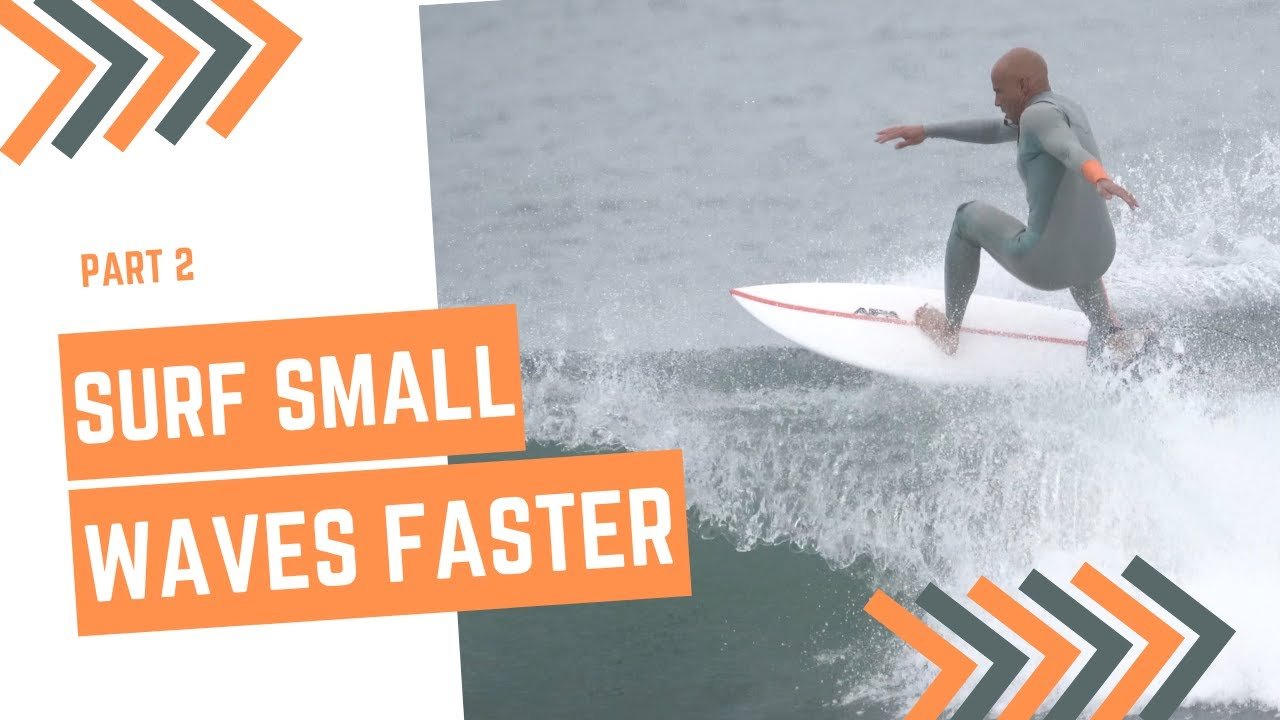
This tutorial is Episode 2 of the “Surfing Faster in Small Waves” series, focusing on frontside technique. It details the mental process and exaggerated movements required to work for speed in small conditions, emphasizing that the top third of the wave is the primary speed zone.
Key Takeaways & Tips
Speed Zone
When riding a small wave, always ride in the top third of the wave because this is the speed zone. Going up and pushing off the board is a form of pumping that helps you generate speed down the line.
The Aggressive Pump
In a small wave, exaggerate your compression and extension. The motion should look and feel like an aggressive up-down pump, where you compress down hard and are quick to extend out. The arms, which are in front of you, will help you project forward.
Forward Weight Shift
To maximize speed down the line, shift everything forward. Your feet are forward on the board, and your entire body’s weight is shifted forward. Your back foot should be further forward, on the front of the traction pad or even in front of it.
Exaggerated Compression
Exaggerate your compression by aiming to get your left knee and left shoulder to nearly touch. This maximum compression stores energy that, when released, gives you the necessary burst of speed to get down the line.
Maneuver Choice
Choose maneuvers that help you go fast down the line, such as speed snaps and floaters. You should be projecting forward out of these maneuvers, often shifting your weight forward and keeping your hands forward.
Common Mistakes to Avoid
Ignoring Speed Zones
Failing to ride in the top third of the wave means you are not utilizing the primary speed zone, forcing you to work harder for momentum.
Partial Compression
Many surfers only compress halfway. You must get as low as possible to maximize the burst of speed you get from extending out.
Late Pump Initiation
The first quick pump needs to be initiated immediately at the top of the wave when you first get to your feet to establish momentum quickly.
Poor Rhythm
When navigating a flat spot, failing to compress and extend with good rhythm while weaving between the toe side and heel side rails will cause the surfing to look choppy, not smooth.