
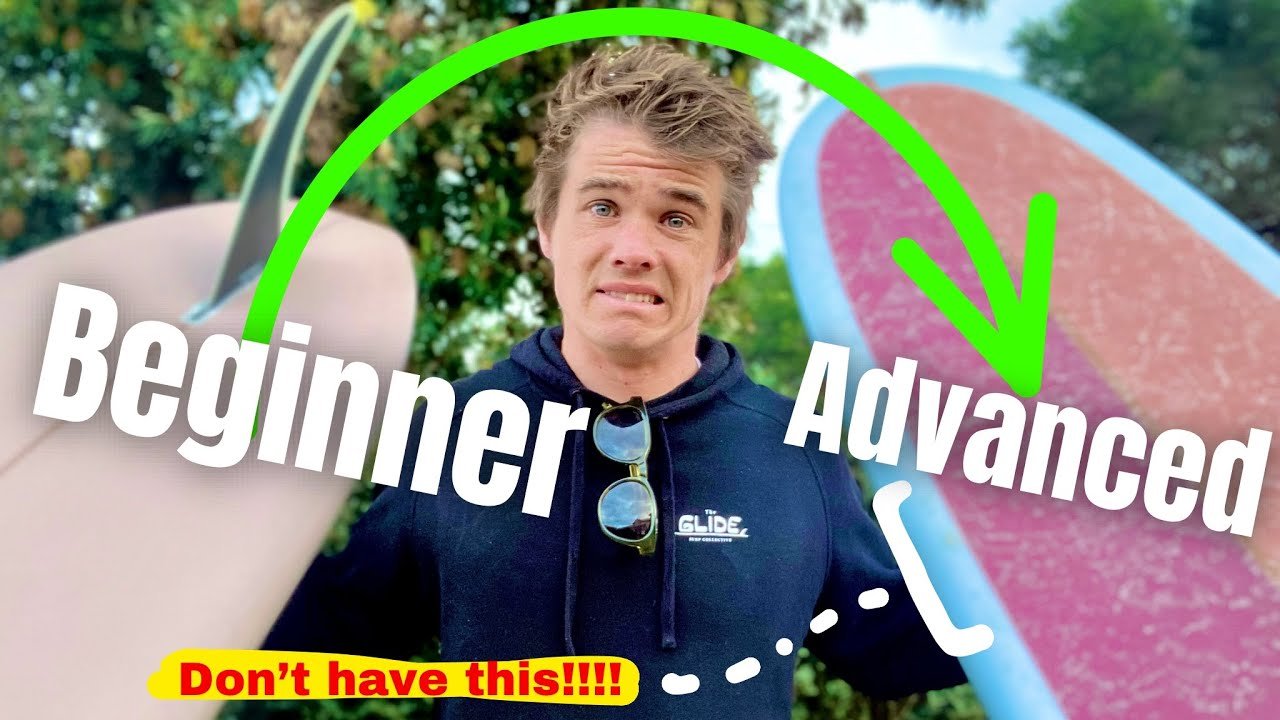
Surfing progression relies heavily on choosing the right equipment for your skill stage. This guide breaks down the essential longboard design characteristics—wide point position and rocker—to ensure your board supports your development and avoids stifling your progress.
Key Takeaways & Tips
Beginner/Advanced Board Design
For mastering fundamentals (cross-stepping, nose riding, turns), choose a board with the wide point in the center. This provides maximum stability and reliability for practice in a variety of conditions, including mushy, shoulder sections.
High Rocker Benefit
For beginners, keep the rocker fairly high through the board. More rocker makes it much easier to disengage the rail when turning (preventing rail catching/bogging) and provides nose ride safety by creating lift to push water away, stopping nose dives.
Advanced/Expert Board Design
For critical, competitive surfing, choose a board with the wide point at the back (pig shape) and a flatter outline (less rocker). This design is highly conducive to carving maneuvers, tight pocket noserides, and maintaining speed/power in critical parts of the wave.
Wide Point Back Benefits
Moving the wide point back decreases the board’s swing weight at the nose, making turn rotation much easier. The narrow nose also allows the board to fit tight into the pocket for critical noserides.
Tail Kick
Regardless of the wide point position, always advocate for a little tail kick (rocker at the tail). This is instrumental in making sure the board can noseride well by locking the tail in and holding it in the pocket.
Common Mistakes to Avoid
Beginner Riding Pro Boards
Beginners riding equipment designed for pros (which are often too narrow and lack stability). These boards are designed for critical surfing and will hold back development of the fundamentals.
Overly Supportive Boards
Advanced surfers staying on boards that are too supportive (wide point center). These boards prevent progression to the next stage because they don’t challenge the surfer to stay critical and limit high-performance carving maneuvers.
Catching Rail
In the early stages, catching or bogging a rail is a major problem, often due to too much rail engaged for the turn or wave section. A board with less rocker exacerbates this issue.