
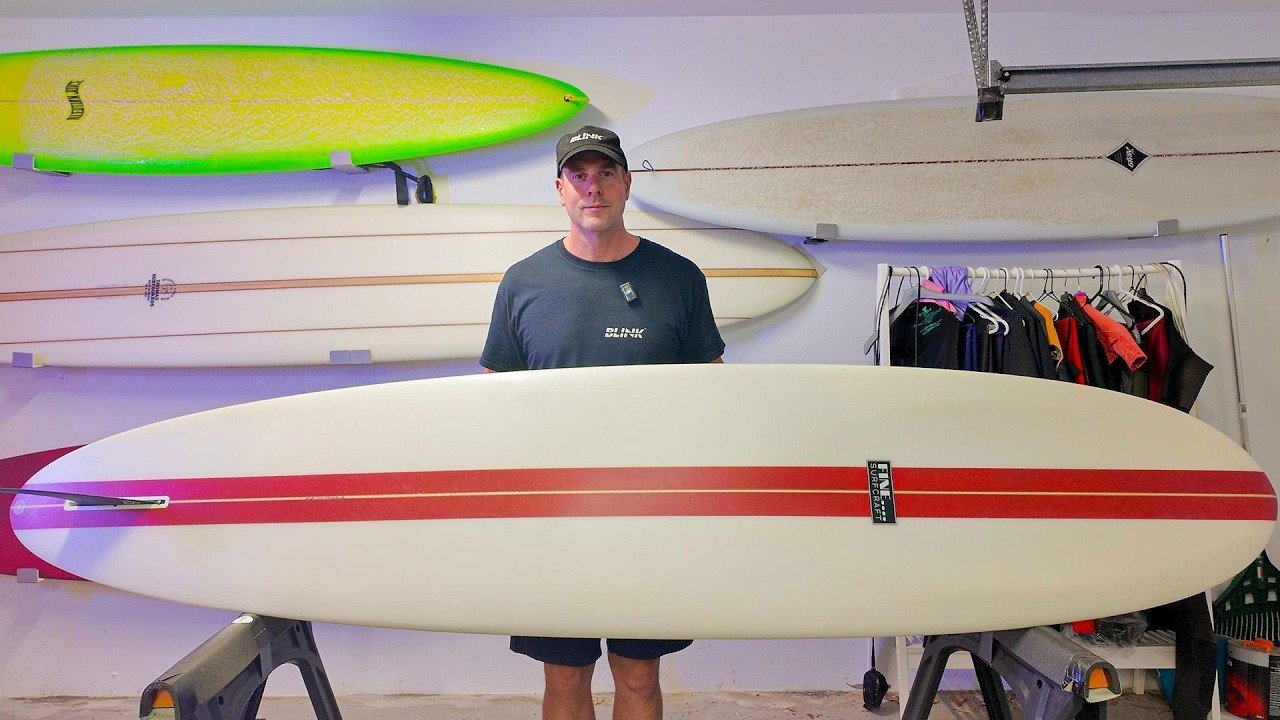
Longboards are not all created equal. There are several typical styles, and choosing the wrong one can stifle your progress. This tutorial reviews four distinct longboard designs—Performance Noserider, Glider, Traditional Log, and Speed Shape—to help you find the most versatile board for your quiver.
Key Takeaways & Tips
1. Performance Noserider (Versatile)
This board (e.g., Wit Beer) is lightweight, has fine rails, a wide nose, and a pulled-in tail. It has a single concave in the nose, flat/rolled edges in the middle, and V out the tail with enormous tail rocker. Suited to: 2–4ft point breaks; it is the most versatile style for everyday use.
2. Glider (Maximum Momentum)
A very long (e.g., 12ft), heavy board designed for momentum. It has a rolled entry, gentle roll through the middle, and V out the tail with minor tail rocker. Suited to: 1ft and fat waves. Paddles: Extremely well (can be knee-paddled); creates incredible momentum and glide. Avoid: Noseriding or very hollow waves.
3. Traditional Log (Noserider)
A classic, heavy board (e.g., 9’4″ Bronze Whaler) with pinched rails for turning and a flat rocker (mild single concave). Suited to: Ankle-high to 1ft waves. Caution: Very heavy and difficult to turn or carry once waves exceed 1ft. Designed for traditional logging and noseriding.
4. Speed Shape (Most Versatile)
A highly versatile board (e.g., Kio Cheetah) with a rolled nose, double concave, and V double concave tail. It has a fair bit of tail rocker and a pulled-in rounded pin tail. Suited to: Small waves up to 6–7ft+. Performs: Excellent turns and speed. Best Feature: It is the ideal, most versatile longboard for travel and all-around performance.
Speed Shape Fin Position
For the Speed Shape, moving the fin forward makes it looser; moving it back gives more stability. The optimal position for this versatile board is right in the middle of the fin box for a balance of turn and drive.
Common Mistakes to Avoid
Glider Purchase
Buying a Glider if you do not live near the water or have an easy way to transport it. The board’s extreme weight is a major barrier to use and makes it very user-unfriendly compared to other longboards.
Glider Riding
Attempting to noseride or surf very hollow waves on a Glider. It is not designed for noseriding and performs best on fat or small hollow waves, as it carries too much momentum for critical sections.
Fragile Construction
Choosing a very lightly glassed performance noserider for everyday use. While lightweight and maneuverable, they are fragile and will not hold up well against heavy use, leading to frequent wear and tear.