
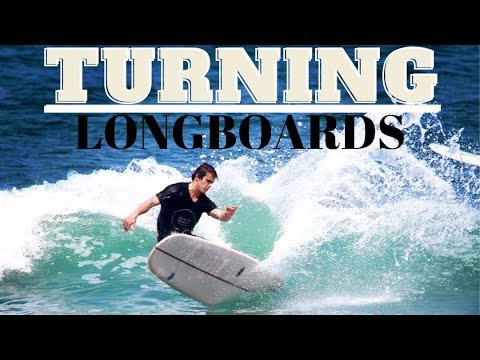
Turning a longboard can feel difficult, but it’s often due to problems with your position on the board and your position on the wave. This tutorial delves into three specific ways to fix the difficulties associated with turning longboards effectively.
Key Takeaways & Tips
Lateral Shift to Engage Rail
Because of the width of a longboard tail, you must be precise with your foot placement. Shift your back foot laterally (side-to-side) so you are standing directly on the toe-side rail or the heel-side rail. This allows pressure to tilt the board and begin the turn.
Foot Distance Back
The distance your back foot is from the tail depends on the section. For a flatter, slower section, move the foot further back onto the tail to disengage more rail. For a steep, fast section, you can afford to place the foot slightly further forward, as speed allows more rail engagement.
Use the Whole Wave (Space)
Think of the wave as a canvas for drawing lines. Because longboards engage so much rail, the arc of the turn is long. You must commit turns from the top of the wave to utilize the whole face, allowing that long, drawn-out carve to happen with speed.
Tilt and Tail
Every successful turn requires Tilt (pressure on the rail, which makes the board turn) and Tail (pressure on the back of the board, which lifts the nose and disengages excess rail). You must achieve both simultaneously.
Practice on Land
Use land practice to commit to the lateral back foot shift. Practice placing your back foot onto one side of the rail as you come back off a cross-step or enter a turn. This builds muscle memory for dynamic turning.
Common Mistakes to Avoid
Foot Dead Center
Placing your foot right in the middle of the tail. The tail is too wide to turn from the center; this causes you to place weight on the tail (slowing down) without placing the board on tilt (turning), resulting in a slow, heavy feeling.
Turning from the Bottom
Committing a carving turn from the bottom of the wave. You use up all your speed, have no room to draw out the carve, and will end up too far out on the flats, likely resulting in bogging a rail.
Not Far Enough Back (Fat Section)
In a fat/slow section, failing to place your foot far enough back on the tail. This prevents you from disengaging the necessary rail, causing you to catch a rail and fall when trying to turn.