
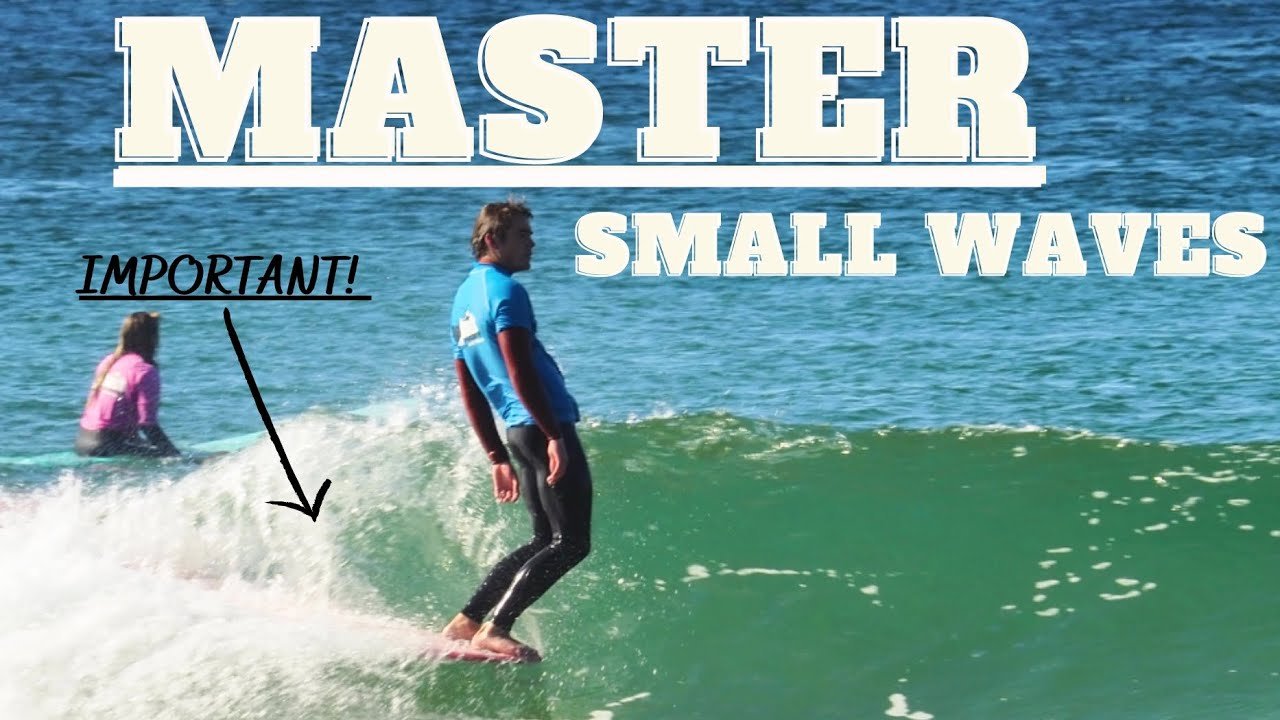
There are three key aspects to master when riding small waves: maintaining glide and flow, prioritizing positioning, and adapting your turn execution. Small waves provide less natural speed, power, and space, forcing the longboarder to be precise with every maneuver to maximize momentum and flow.
Key Takeaways & Tips
Maximize Trim in the Sweet Spot
To maintain glide and flow in small waves, avoid hanging on the tail unless initiating a turn. Instead, shift your weight to the sweet spot (typically the wide point or slightly in front of it) to maximize trim and effortlessly carry momentum through flatter sections.
Embrace Flow Over Power
Avoid trying to execute hard, powerful turns, as the wave lacks the speed and power to project your board away, which often results in bogging the rail. Instead, embrace the flow and glide of the longboard by using less push and slightly dialing back the intensity of turns.
Lightly Press on the Tail
To execute turns without bogging the rail, lightly press on the tail to initiate your arc. This allows you to produce beautiful, long, and deep lines without requiring the massive push needed in bigger waves.
Hug the Critical Section (The Pocket)
Unlike big waves where you have more margin, in small waves, you must constantly hug the pocket (the critical breaking section) to harness the minimal speed and drive the wave offers. Veering too far out onto the shoulder risks falling off the back due to loss of momentum.
Small Waves are Great Practice
Practicing in small waves is excellent for overall progression because it forces you to become proficient at staying critical on the wave face, which is vital for all maneuvers (nose rides, turns, etc.) in any size surf.
Common Mistakes to Avoid
Losing Speed on the Tail
Sitting on the tail for too long when not turning causes significant drag, leading to a loss of speed and momentum that small waves cannot naturally replenish.
Overcooking Turns
Trying to turn too hard, especially in fat sections. This leads to bogging a rail, losing speed, and failing to execute the turn because the wave does not have enough speed and power to allow your board to project.
Surfing Too Far on the Shoulder
Being comfortable surfing far out on the shoulder is a mistake in small waves because you quickly run out of speed. The natural power of the wave is not enough to push you along, increasing your risk of falling off the back.