
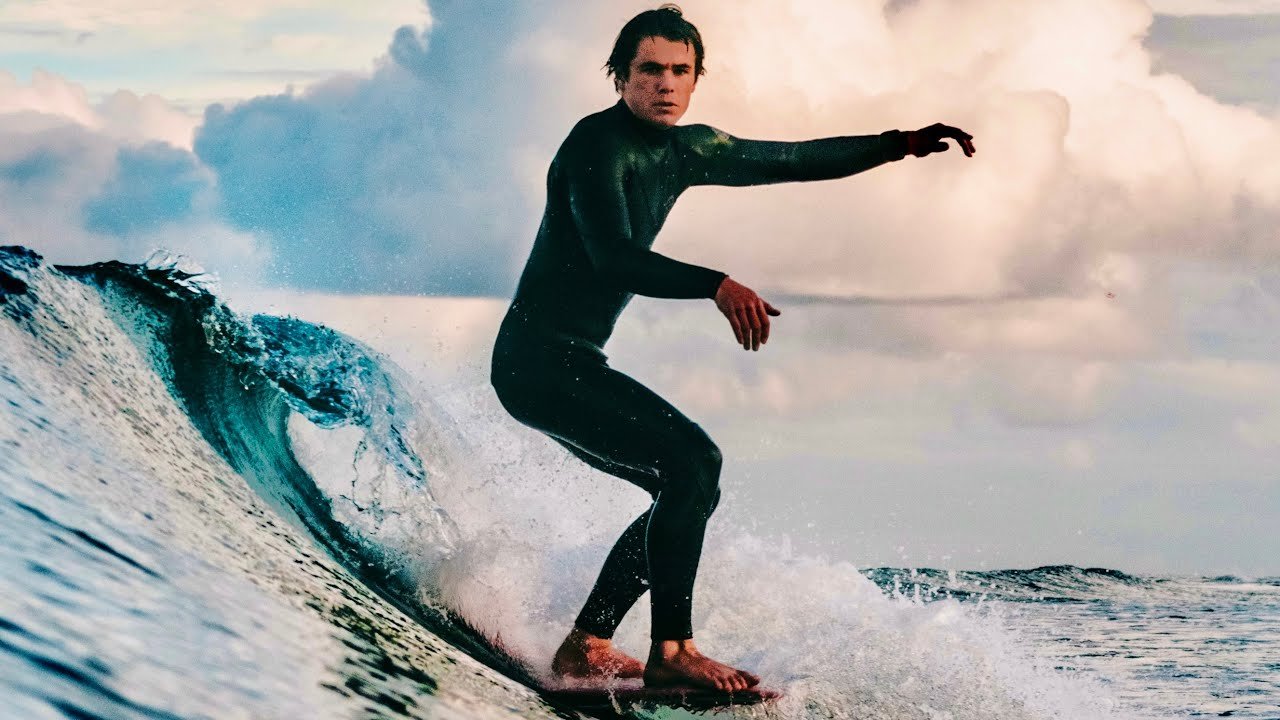
Key Takeaways & Tips
Rotate Your Chest Towards the Nose
The most crucial distinction for backhand cross-stepping is rotating your chest and hips to face forward, toward the nose. Being “sideways facing” (chest toward the beach) is the main problem, leading to a stiff, grapevine cross-step and loss of forward momentum.
Keep Your Eyes Up and Look Down the Line
Do not let your feet become your primary focus. Once your chest is rotated, your eyes must look up to analyze the sections ahead. You can glance at your feet, but maintain awareness of the section you are moving into.
Anchor Your Weight on the Back Foot on the Nose
When noseriding, keep your primary weight on the back foot (the foot closest to the tail) to maintain a stable anchor. Only “poke the toe” of the front foot forward. Having too much weight on the front foot can lead to nose dives, especially if you are not in a perfectly critical section.
Use the Heel-Side Rail to Hug the Section
For advanced riders or when the board is not perfectly positioned, stepping out towards the heel-side rail (the inside rail) engages the edge of the board. This pressure will draw you up the face of the wave, helping you hug the critical section more tightly.
Balance the Board with Opposite Arms
To prevent tipping and maintain balance on the nose, avoid stooping both arms over one side of the rail. Aim to have one arm on either side of the stringer to steady yourself and distribute your weight evenly.
Common Mistakes to Avoid
Nose Riding with a Sideways Stance
If your chest and hips are facing sideways (toward the beach), your cross-step will be stiff, short, and unstable, which often leads to falling. Full rotation is required before taking steps.
Placing Too Much Weight on the Front Foot on the Nose
Applying a lot of weight to the forward-most foot on the nose presses the nose down into the water, leading to instability and making a nose dive more likely if the wave isn’t perfectly supportive.
Allowing Both Arms to Drift to One Side
When facing sideways, both arms naturally droop over the same rail. This places excess weight on that rail, causing the board to wobble or tip, and makes it much harder to make subtle rail adjustments to stay in the pocket.