
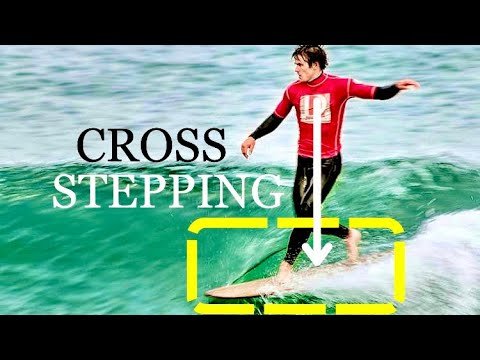
Cross-stepping backwards is a challenging skill often limited by poor foot placement and incorrect body lean. This tutorial breaks down how to identify your specific problem (usually an off-stringer landing) and provides drills to build the confidence needed to walk backward to the tail.
Key Takeaways & Tips
Step with Intention
Do not lazily put a step back. Step backwards with intention, deliberately placing your foot across the stringer line. This prevents the board from tilting and helps maintain balance.
Commit Weight from Hips Down
Leaning backward is not the same as committing your weight backward. Keep your upper body low and somewhat neutral, and shift your weight back from your hips downwards to maintain control and stay balanced.
Practice Mid-Board to Tail
Begin practicing backward cross-stepping from the middle of the board to the tail, rather than from the nose. This is a more balanced starting position and will result in higher success and stability.
Two Steps Back, Reset
If you find yourself running off the back of the board, use the two steps back, reset method. Take two steps back, stabilize your balance, and then commit the next two steps backward. This avoids excessive momentum.
Land Practice
Practice your backward cross-stepping on land first, ideally recording yourself. This gives you a visual insight into where your feet are landing in relation to the stringer and helps consolidate muscle memory before entering the water.
Common Mistakes to Avoid
Landing Off the Stringer
The back foot (non-dominant foot) is most likely to land off the stringer, typically on the heel-side rail. This causes the board to wobble and prevents a successful cross step. Use land drills to correct this specific foot landing.
Arching the Back
Straightening the legs and bending the back backward in an attempt to commit weight back. This is difficult to balance and is the wrong method for committing weight; it should come from the hips down.
Cross-Stepping from the Nose
Starting backward cross-stepping from the nose. This is the most difficult and unstable position, leading to rushed, wobbly steps and less success.