
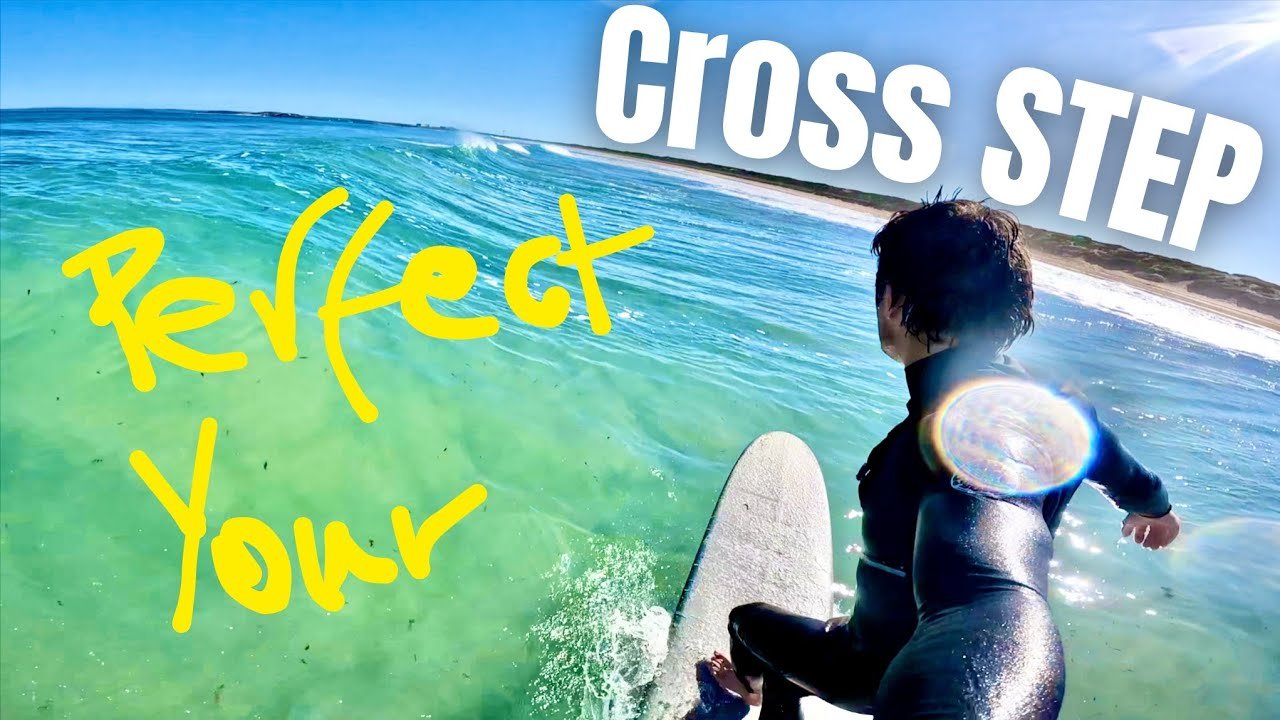
Noseriding is a top goal for many longboarders, but it hinges on correct cross-stepping technique. This tutorial provides a no-fuss method to correct the common errors of spacing and hesitation, ensuring stable cross-steps that allow you to reach the nose every time.
Key Takeaways & Tips
Spacing: Small Step, Big Step
The most valuable strategy is the small step, big step process. This enables you to leave a large amount of space in front of you to complete the final two steps to the nose, providing a wider base of support and improving commitment.
Land Drill: Wax Line Cue
Practice the small step process on land first. Mark a wax line on the board where your front foot should land after the first two steps. This line should look too far back (about a foot to a foot and a half ahead of the board’s center) to ensure enough room for the big final steps.
First Step (Small)
The first step must be smaller, ensuring you do not drive yourself too far up the board prematurely. This leaves the required space for the final two steps.
Second Step (Big)
The second cross step should be bigger, allowing you to adopt a wider stance on the nose. This leaves the back foot further back, meaning you don’t have to be in a super critical, steep section like when you’re hanging ten.
Safe Zone
After the first two small steps, you are in a safe and comfortable zone on the board where you can stop and assess the wave. If the wave is not an appropriate section, you can safely backtrack to the tail without risking a nose dive.
Common Mistakes to Avoid
Uneven Spacing
Thinking that you need to have your cross steps evenly spaced out. This is incorrect and often leads to the mistake of stepping too far forwards after the first two steps.
Rushing the Nose
Rushing the first two steps, which causes them to land too close to the nose. This leaves a small amount of space to complete the final two steps in the most wobbly part of the board and a critical part of the wave.
Cramming Steps
Attempting to cram the final two steps very close to the nose. This forces the stance to be unnaturally close and requires a very critical wave section to avoid pearl diving.