
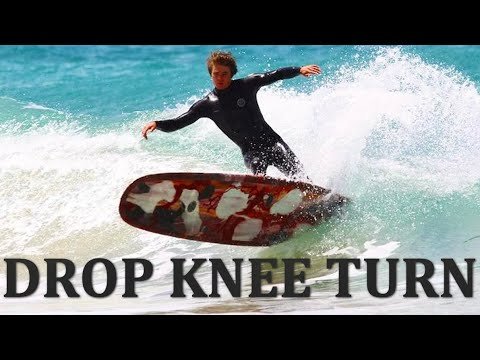
This tutorial breaks down the fundamental and unique longboard maneuver, the drop knee turn. The lesson covers the most common mistakes, the precise foot and body positioning required for success, and how to use compression and extension to drive through the turn.
Key Takeaways & Tips
The Stance
The stance needs to be very wide to allow the weight to shift from the front foot to the back foot. The front foot remains angled across the stringer, but the back foot is positioned with the heel and toe along the stringer (straight down the board).
The Back Foot Adjustment
To initiate the stance, use a toe poke toward the tail, ensuring the foot goes straight along the stringer. You must keep your chest forwards over the front knee while adjusting the back foot to maintain control.
Toe/Heel Pressure
For a drop knee turn, only the toe or ball of your back foot should be on the board; there should be no mid-foot or heel contact. This allows you to use your heel and toe to deviate your weight from one side of the rail to the other for turning.
Executing the Turn
Beginners should practice by easing the weight slowly back onto the back foot, only as needed (the “safety turn”). For a power turn, place the board on rail first, get low, and extend the back foot out to accelerate through the turn.
Compression and Extension
For the power turn, you must get low (compressed) and then push that tail down to extend and accelerate through the turn. You cannot extend effectively in a slow, fat section of the wave.
Common Mistakes to Avoid
Narrow Stance
A narrow stance will not work because you lack the space to shift your weight from the front foot to the back foot, which is essential for the turn.
Weight Back Too Soon
Adjusting the back foot while simultaneously transferring all your weight backwards will muck up the turn. The weight must stay forward over the front knee during the adjustment.
Mid-Foot/Heel Contact
Having mid-foot or heel contact on the back foot will leave you stuck and unable to use the heel-toe mechanism to deviate your weight.
Stalling Compression
Staying too compressed or dropping the knee low in a slow, fat section of the wave will cause you to bog the board, making it act like an anchor and stopping the board completely.