
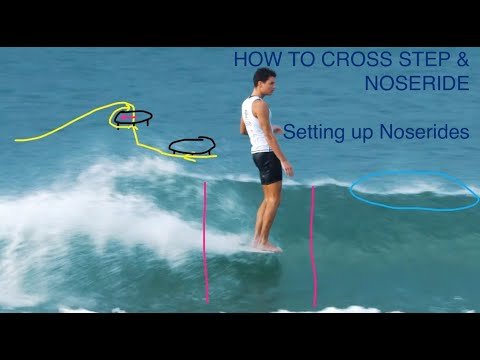
Positioning on the wave is critical for successful cross-stepping and noseriding. This tutorial argues that stability doesn’t come from water pressing down on the tail, but from the physics of the wave face: the Apparent Flow of Water and the Coanda Effect.
Key Takeaways & Tips
Apparent Flow of Water
The apparent flow of water coming up the wave face is trapped underneath the surfboard, acting like a hydrodynamic foil. This traps the water and propels the board forward, giving you speed, momentum, and stability.
Coanda Effect / Rail Grip
The round rails of classic longboards cause the water to grip the rail (Coanda Effect), literally pulling the surfboard into the wave. This rail grip provides stability and lift for walking to the nose.
Visual Cue: Feathering
Look for the feathering or sparkles on the water, which indicates the steepest part of the wave before it breaks. This is the optimal section to trap water flow and set up your noseride.
Take Off Straight into Trim
Especially useful at point breaks, take off deep and immediately lean on your inside rail to engage the trim. This allows you to get straight up to the nose while traveling through the steep section.
Faded Takeoff
Paddle in the opposite direction you plan to surf. This burns off speed but, more importantly, allows the wave to stand up and steepen in front of you. Once the section builds, you can quickly turn back into trim and noseride.
Bottom Turn into Trim
Take off straight toward the beach, move your weight back on the tail to change direction with a quick bottom turn, and then accelerate into trim. This is effective for generating speed immediately after a deep takeoff.
Stall Method
Put all your weight to the back of the board, jam the tail into the wave, and slow down to let the wave overtake you. Then, accelerate through the section to get into trim (often used when a coach is teaching stalling).
Common Mistakes to Avoid
Setting Up on the Shoulder
Moving too far out onto the shoulder where the wave is flatter. This is a poor position to noseride because you cannot effectively trap the apparent flow of water, resulting in less speed and stability.
Setting Up IN the Steep Section
Setting up in the feathering section and traveling out of it. You must set up behind the steep section so you can travel through it for the duration of the noseride, maximizing power.
Relying on Tail Water
Incorrectly believing that noseriding stability comes from water slapping down on the tail. This technique is detrimental in perfect, steep, or offshore conditions.