
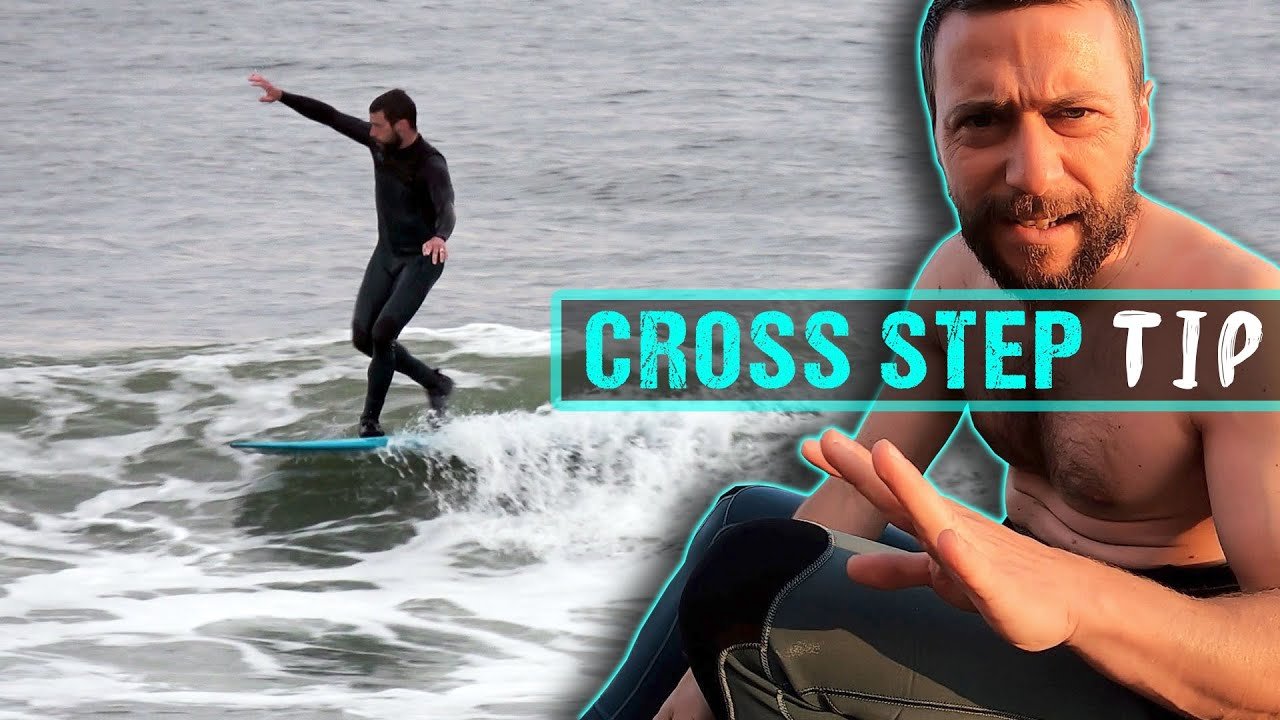
Cross-stepping backwards is often the most difficult part of the maneuver, especially when transitioning back to the tail after a long noseride. This method, taught by Ben Considine, focuses on quickly restoring a stable surfing position rather than attempting a full cross step backward.
Key Takeaways & Tips
The Pivot Shift
The technique relies on making the first back step (after the nose ride) a pivot shift. The first step back is okay to be an unstable movement, but you must immediately pivot off that foot to get your weight back into a stable surfing position.
Goal: Surfing Position
The primary goal of the backward shift is not footwork, but to get you back into a good surfing position to be prepared for the critical section that is inevitably ahead of you after the noseride.
First Two Steps are Key
Focus intensely on getting the first two steps back correct. They are the most important for restoring balance and momentum after the nose ride, and they should transition you immediately into a balanced stance.
Stability Improvement
Using this pivot method improves nose ride completion dramatically, as the transition back to the tail is no longer an unstable, unbalanced point in the cross step.
Common Mistakes to Avoid
Leaning Too Far Back
Leaning too far back on the first step, which creates a highly unbalanced point in the cross step and makes the rest of the movement unstable.
Ignoring Preparation
Coming back from the nose ride without being prepared for the heavy section ahead. The backward movement is the last chance to get into a turning position.
Treating it as Forward Cross Step
Treating the backward movement like the forward cross step. The body positioning and weight commitment needed to walk forward are entirely different from the quick pivot needed to transition backward.