
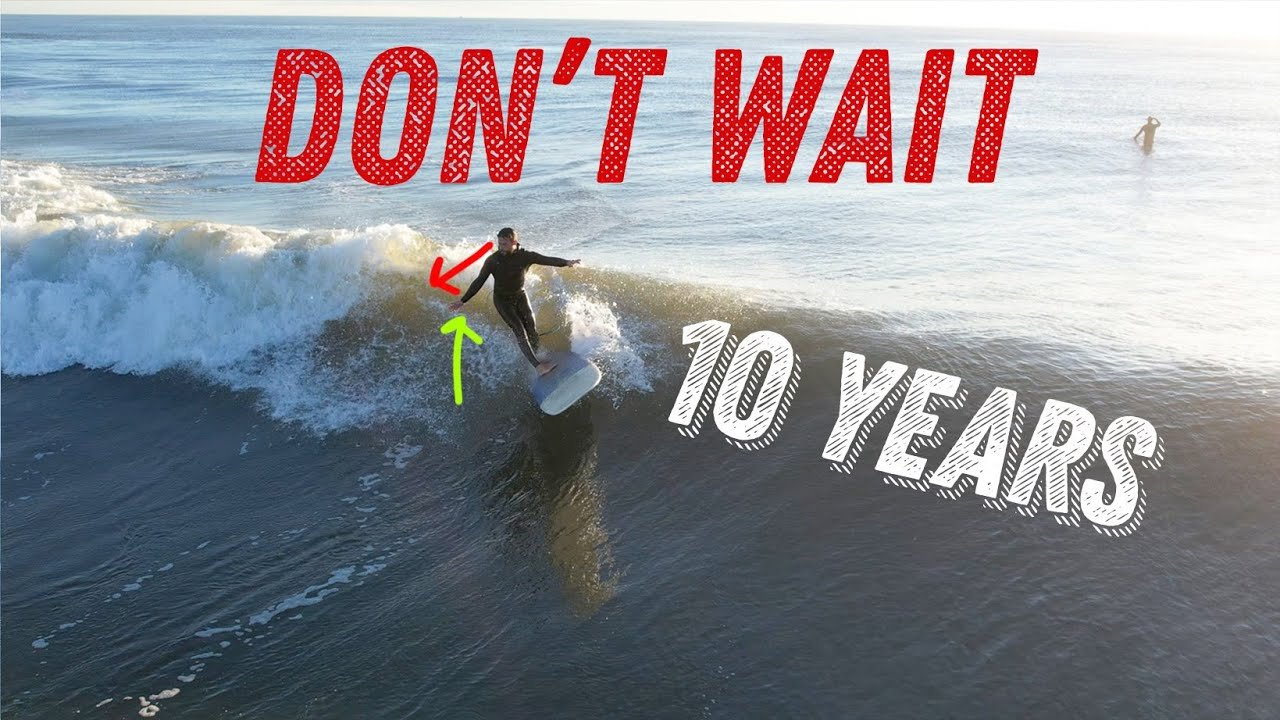
For longboarders, unlocking massive, stylish carving turns often comes down to one element: the shoulder drop. The “Position and Hold” method needs to be modified for carving by integrating a serious back foot and shoulder commitment.
Key Takeaways & Tips
The Shoulder Drop
The key to deep carving is dropping the shoulder closest to the rail you are engaging (trying to touch the water with your hand). This accomplishes two things: it makes it easy to look where you are going and it puts your body into a posture nearly perpendicular to the board.
Parallel Back Foot Stance
To execute the shoulder drop, put your back foot parallel to the stringer (the position often used in a drop knee turn). This naturally opens up your shoulders and chest, making the rotation and shoulder drop easier. This position should be practiced without dropping the knee.
Weight Commitment
The deep, perpendicular posture created by the shoulder drop requires massive commitment. You must put much more weight on that back foot to lift the entire front of the board out of the water. Less weight results in a hunched, timid turn.
Practice Backside Cutbacks
The shoulder drop is particularly effective for backside cutbacks, resulting in controlled and stylish turns. Practice transferring the feeling you get on a skateboard (full commitment) to the water.
Common Mistakes to Avoid
Hunched Over/Timid Turn
Performing a hunched-over, timid turn instead of committing to the shoulder drop and back foot weight. This results in the board feeling sticky and preventing the full, stylish carve you are aiming for.
Fear of Commitment
Struggling with commitment: serious shoulder drop and back foot weight shift require full confidence. You must hit these turns with full confidence and suffer the consequences to learn the feeling of the technique.