
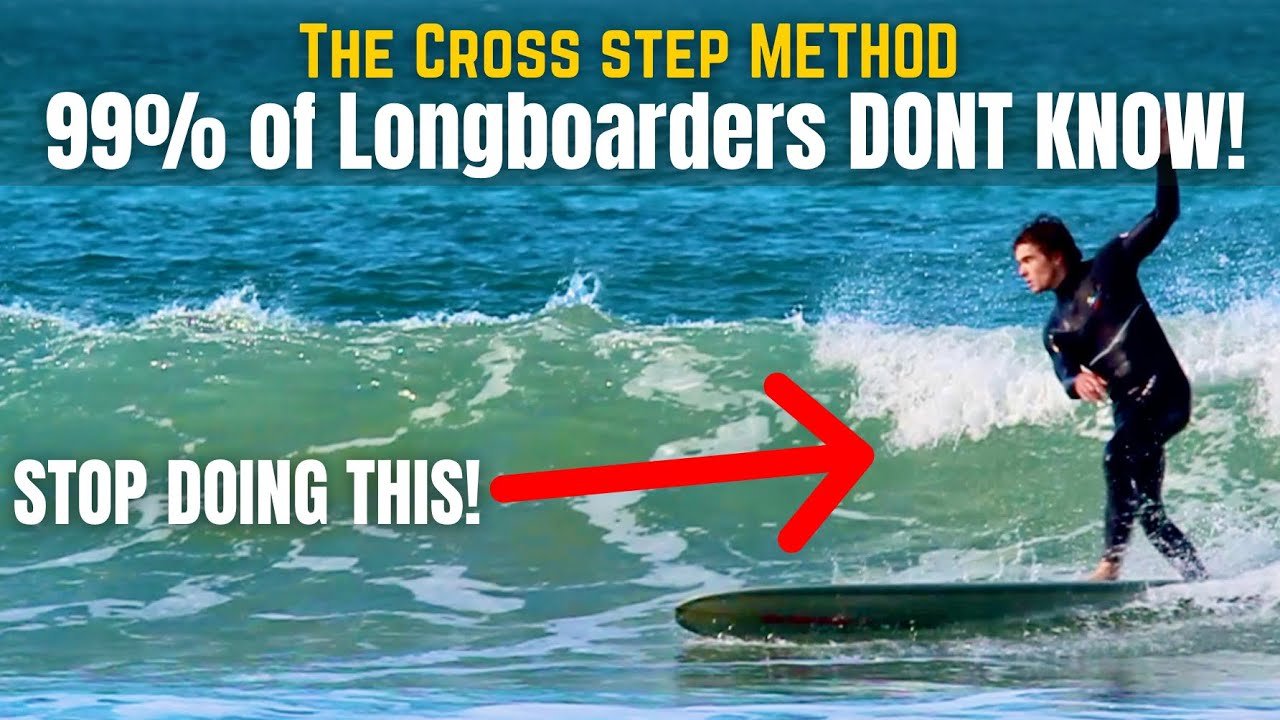
Cross-stepping is a frequent sticking point for longboarders, often leading to hesitation, off-balance steps, and small, rushed movements. This tutorial provides the “Step and Hold” technique, a root-cause solution to build comfort and confidence in the awkward cross-step position.
Key Takeaways & Tips
Step 1: The Step and Commit (Land Practice)
Forget the nose ride and focus only on the first step. Take a big step forwards, stay low, and commit all your weight onto the leading foot. You should be able to draw a line from your head/chest to the front foot. Hold this position for five seconds on land, then return to your baseline stance.
Step 2: The Step and Hold (Water Drill)
In the water, after taking off, come into the first cross step (Step 1) and hold that position for five seconds. Return to your normal surfing position and repeat this drill as many times as you can on the wave. This drill gets you comfortable with the precarious cross-step position.
Step 3: The Full Cross Step (Execution)
Once you are comfortable with the hold, transition to the full cross step. The goal is to make the movement smoother, avoiding the error of skipping and rushing back to the stable position. Make sure there is a smooth filtering of weight onto the leading foot each time.
Focused Practice
Practice in surfing is often interrupted. Implementing focused practice (focusing on one drill or one thing) for a session or part of a session can have a drastic influence on your surfing, leading to bigger improvements.
Common Mistakes to Avoid
Skipping/Hesitation
Hesitating or skipping the cross step by leaning backwards, which is caused by the off-balance and unnatural feeling of the cross-step position. This leads to a skip or a small, rushed step that delivers an unstable result.
Skipping
Rushing the cross step and skipping/missing the first step altogether to rush back into a stable position. This results in an all-or-nothing approach that isn’t smooth or reproducible.
Tall and Stiff
When hesitant, staying too stiff and tall with the legs. Getting lower and committing the weight forward is crucial for maximizing balance and momentum.