
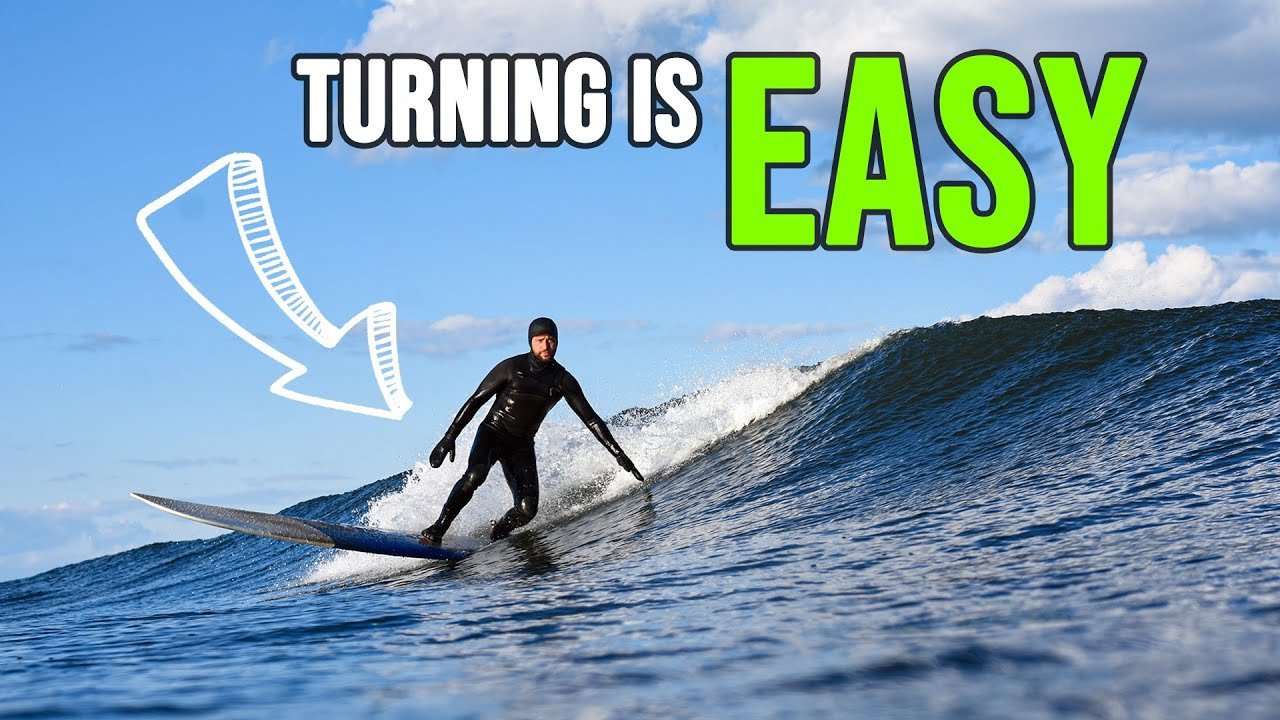
Turning a longboard can feel difficult, but it’s simple if you know the “Position and Hold” method. This method requires three simultaneous movements to engage the fin and escape “turning prison.”
Key Takeaways & Tips
Position and Hold Method
The three movements must be completed at the exact same time: 1) Look and open up your shoulders; 2) Shift about 70% of your weight to your back foot (using hips, not leaning backwards); 3) Shift your weight over the left or right side of the stringer to engage the rail.
Practice with Posture
When shifting weight, maintain your posture. The weight shift should be made with your hips (by maintaining bent knees) and not your upper body (do not lean backward). Hold the final position for the board to react.
Speed Determines Lean
The amount of speed you have dictates how much you can lean into the turn. More speed allows you to dig harder into the rail. With less speed, you must lean less and “nurse” your turn carefully to avoid falling.
Focus Weight
Keep your feet closer together. This helps focus your weight to one specific area of the board and makes turning much easier by allowing greater hip movement and leverage over the rail.
Use the Tail for Turning
Although you can use the Position and Hold method to turn from almost anywhere, the further back you are on the board, the faster you will be able to turn, as it provides greater leverage over the fin.
Common Mistakes to Avoid
Wide Stance
Using a very wide stance. Although it seems to help stability, it actually hinders the movement of your hips and prevents you from focusing your weight over the key turning areas.
Leaning Like a Skateboarder
Trying to turn a surfboard like a skateboard by just leaning in one direction. This will not work because a surfboard must engage the fin to turn, which requires shifting weight over the rail/tail.
Looking at Your Board
Never look at your board during the whole turning process. Your eyes need to be laser focused down the line, as looking down will prevent you from turning at all and will likely cause a wipeout.