
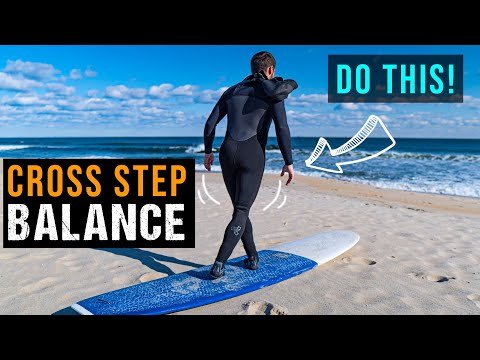
Correcting a weight shift problem on the bottom turn can dramatically improve cross-stepping stability. The technique requires doing an intentional, specific back-to-front weight shift that addresses the common mistake of shifting weight too quickly while the back foot is still gripping the rail.
Key Takeaways & Tips
Back-to-Front Weight Shift
The goal is to be less back-footed and more front-footed when cross-stepping. You must intentionally shift all your weight from the back foot to the front foot, and then begin the cross steps.
Stable Cross Stepping
Once the weight is correctly shifted to the front foot, the board feels extremely stable, described as being like cross stepping on a boat. This stability makes the first cross step work wonders.
Bottom Turn Setup
The problem starts immediately after the bottom turn: the weight is too far back. The weight shift must occur quickly from the back foot to the front foot before the first cross step to compensate for this initial back-footed position.
Steep Section Stability
This method allows for stable cross steps even in extremely steep and critical parts of the wave with no loss of stability. This confirms the technique works regardless of the challenging nature of the wave.
Common Mistakes to Avoid
Early Weight Transfer
Shifting the weight to the front foot too quickly for the first cross step while the back foot is still holding the rail too tightly. This is counter-productive and prevents a stable step.
Being Too Back-Footed
Being excessively back-footed when cross stepping. The general consensus among longboarders is that the stance should be slightly more front-footed to improve glide and stability during walking.
Ignoring Fundamentals
Focusing solely on advanced aspects of cross-stepping (like speed or toe/heel weight) while ignoring the foundational weight shift on the bottom turn, which sets up the entire maneuver.