
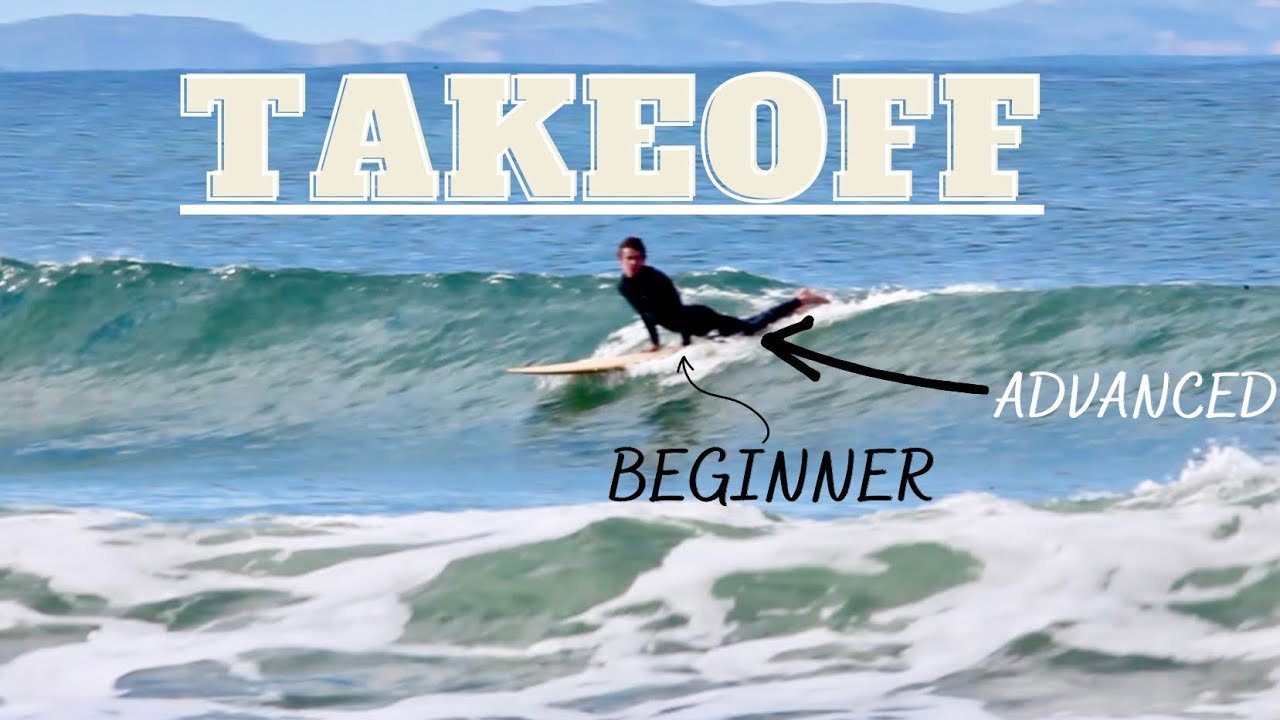
The takeoff is fundamental, but surfers often fail to adapt their pop-up as they progress out of the whitewater. This limits their ability to position themselves correctly on the wave and makes it difficult to pop up successfully in critical sections. Adapting your pop-up from the middle of the board to directly on the tail will instantly improve your critical surfing.
Key Takeaways & Tips
Beginner Pop-Up Position
When learning in the whitewater or on the shoulder, the feet are brought underneath the hips and chest (far forward) to maximize speed and drive, as weight on the tail causes too much drag.
Advanced Pop-Up Position
For critical, steep takeoffs, your feet must land immediately in the correct position to place weight onto the tail. This is necessary to lift the nose and prevent nose diving, and to commit to a turn straight away.
Commit the Turn Immediately
To avoid the wave racing past you, you must be in a position to turn as soon as you pop up. Place your weight onto the tail and engage the inside rail (the toe or heel) immediately to commit the turn.
Filter Weight Back
Do not immediately place all weight onto the back foot. Keep the weight forward and slowly filter it back as you ease more weight onto the inside rail. This allows you to carve without stalling the board completely.
Practice Land Drills
Practice the new foot positioning on the land at least a few times a day to build muscle memory for where your feet need to land in relation to the tail for an immediate turn.
The Faded Takeoff
This maneuver is functional, feels good, and allows you to be more critical. It involves a swooping action off the bottom, projecting away from and then into the face of the wave. It can also be used as a stall to put yourself into a critical section.
Common Mistakes to Avoid
Nose Diving
Popping up in the middle of the board in a critical section prevents you from placing the correct amount of weight onto the tail, leading to a nose dive and forcing you to avoid those steep sections in the future.
Delayed Turning
Popping up in the middle of the board leaves you out of position to turn immediately, as you have too much rail engaged and not enough weight on the tail. This causes you to miss the section or slow down too much.
Stalling the Carve
Placing too much weight just on the tail without engaging the inside rail (toe/heel). This causes the nose to flip up and creates too much drag, stalling your momentum instead of carving along the wave.