
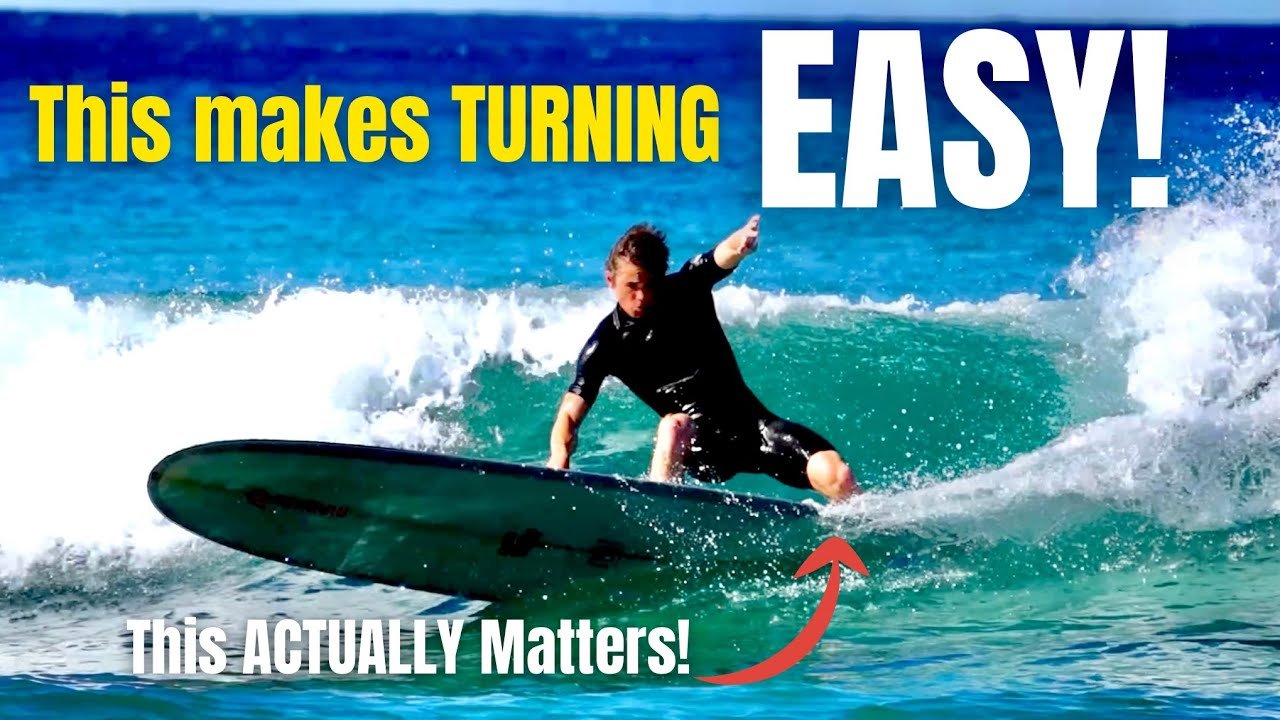
Turning big boards like longboards, soft tops, or mid-lengths often feels difficult because the board won’t react to weight shifts. This tutorial reveals the trick of the trade—the adjustable back foot positioning—which helps experienced longboarders regain control and execute epic turns.
Key Takeaways & Tips
The Tilt and The Tail
For any good turn, you need Tilt (pressure onto the rail to engage the turn) and Tail (pressure onto the tail to lift the nose and disengage excess rail). Without tail pressure, the board becomes sticky due to too much rail engaged.
Adjustable Back Foot Solution
The solution to turning is to use lateral (side-to-side) back foot movements. Shift your toes further onto the toe-side rail or your heel further onto the heel-side rail. This increases the pressure applied to that rail, engaging the turn more effectively.
Tail Width Problem
The width of a longboard’s tail is the problem. Placing the back foot dead center is often not enough to effectively engage the rail, even with pressure, causing the board to bog or feel stuck in concrete.
Land Practice
Land practice is crucial for committing the back foot’s lateral positioning to muscle memory. Practice coming into the stance from a variety of positions, winding into the turn on the tail to commit the back foot position correctly.
Confidence and Progression
Learning the adjustable back foot placement is significant. It increases your confidence in directing the board and is the foundation for progressing to more dynamic and powerful turns.
Common Mistakes to Avoid
Placing Foot Dead Center
Placing the back foot dead center in the middle of the board while following all the other rules. This prevents effective rail engagement on wide longboard tails and is a common problem.
Exaggerated Position
Going too extreme with the back foot position, such as having your toes over the edge of the rail (like a hang five on the rail). While the shift is needed, it must be refined for control.
Turning Too Fast
Expecting the big board to turn quickly. Directing your weight too aggressively will leave you going one way while the board remains stuck, as the board requires a moment to engage the rail and fin.