
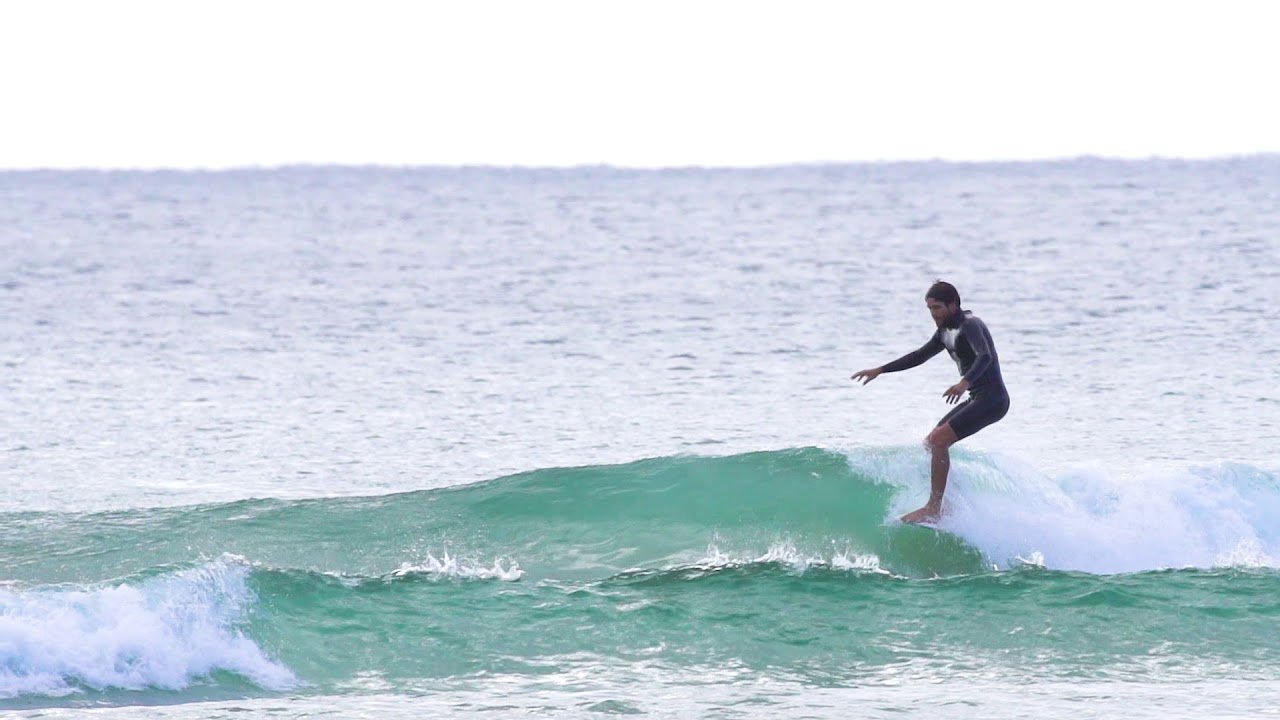
Noseriding success depends on mastering two crucial factors: executing the cross step perfectly and timing your hang ten for the appropriate wave section. This tutorial, featuring two-time world champion Beau Young, breaks down the key to hanging ten, from the initial cross step to maintaining balance in the pocket.
Key Takeaways & Tips
Hang Five Stance
The first step is to cross step to the hang five position. In this stance, the majority of your weight should be on the back foot, with five toes extended over the nose.
Hang Ten Position
To transition to the hang ten, look at the critical, hollow section (the pocket) ahead of you. When you are in that section, shift your back foot up next to your front foot, perching with ten toes over the nose of the board.
Hang Ten Balance
Keep your knees slightly bent and roll most of your weight onto your heels. Use your hands out to your sides (like walking a tightrope) to counterbalance and maintain the position for as long as possible.
Fin Setup
If you are struggling, check your equipment. A single fin is typically preferable for this maneuver due to its width and stability. A go-to option is a larger longboard hatchet fin, as small fins can be problematic (the tail can slide out).
Weight Distribution
Once you are comfortable on the nose, distribute your weight from heel to toe and left to right. This movement is used to increase/decrease speed and alter your positioning on the wave face for maximum hanging time.
Common Mistakes to Avoid
Tail Slipping
If the tail of the board is slipping, you are most likely positioned too high in the wave face or too far into a hollow section.
Nose Sinking
If your nose is starting to sink, it is because you are trying to achieve the maneuver in a flatter section of the wave, away from the pocket and power source. Step back, slow down, and re-engage with the pocket.