
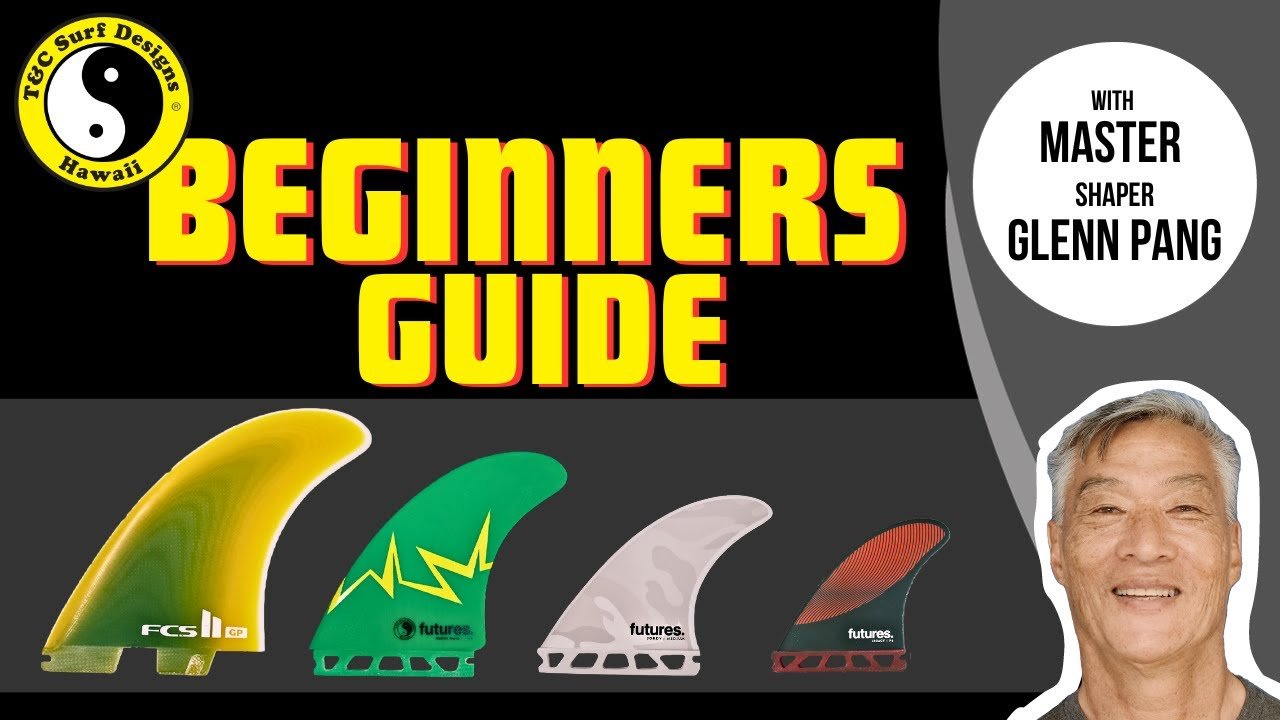
With so many variations in surfboard fins (size, quantity, material, rake, shape), it can be overwhelming to choose the right setup. This video breaks down the characteristics of common fin configurations and the technical factors that affect how your board performs.
Key Takeaways & Tips
Fin Configurations
The most common setups include: Single Fin (cruisy, longboard feel); Twin Fin (faster, looser, more drive due to bigger fins); Thruster (most versatile, best overall feel); and Quad (faster, draws a longer line).
Fin Geometry: Rake and Pivot
Rake is the distance the fin curves away from the base. More rake gives you less ability to pivot but more hold for carving. Less rake (more straight up) gives you more ability to pivot.
Fin Geometry: Base and Drive
Base is the widest point where the fin meets the board. The wider the base, the more hold and drive. The more narrow the base, the faster and looser the board will feel.
Fin Material
Fiberglass (most common, good for bigger waves) is balanced. Honeycomb (lighter, stiffer) has a quicker spring reaction. Plastic (most flexy, best price) has a slower, less quick reflex.
Foil (Center vs. Side Fins)
Center fins (Thruster/4+1) have foil/curve on both sides to hold more water and maintain stability. Side fins (front fins) normally have a flat inner side to allow water to release more easily, which loosens up the board.
Cant and Speed
Canted fins (angled outwards) roll onto the rail easier but are slower. Straight fins (more upright) are faster but won’t roll as easily. More severe cant angles lead to easier rail-to-rail transitions but significantly reduce speed.
Quad Setup Advice
Quads naturally draw a longer line. To prevent the board from holding too long a line, the front fins should be designed with more of a pivot shape (less rake) to allow the board to still release during turns.
Common Mistakes to Avoid
Ignoring Drag
Not accounting for drag when choosing twin fins. The center fin creates so much drag that removing it (riding a true twin) makes the board significantly faster and looser.
Incorrect Sizing
Not matching fin size to the rider’s weight. Bigger fins are for bigger/heavier surfers (more hold). Lighter/smaller surfers need smaller fins geared for their size to achieve optimal looseness and turning ability.