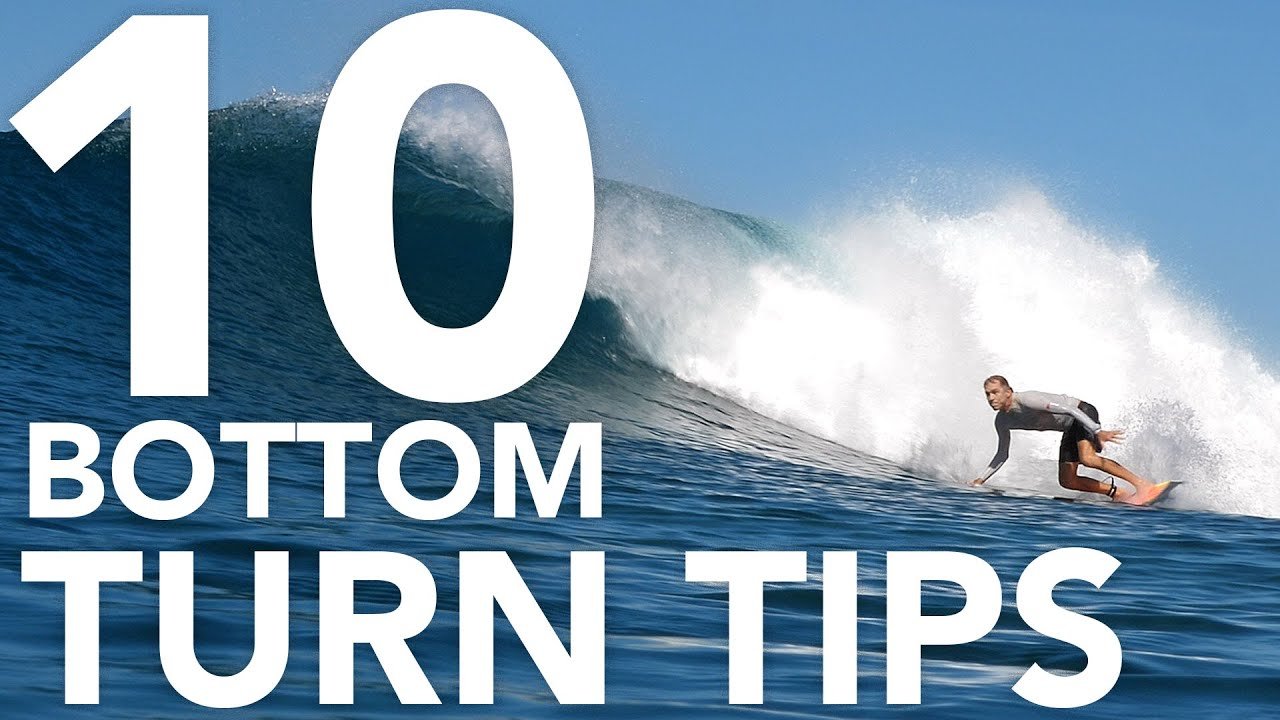
This tutorial breaks down the bottom turn, which is described as the crucial setup maneuver in surfing. It focuses on how to tap into the wave’s energy and lift, emphasizing that the bottom turn is purely a setup to gain height and potential energy for the next maneuver.
Key Takeaways & Tips
The Wave’s Lift
The most important, often understated part of surfing is that water draws off the bottom, creating lift. This lift gives you potential energy to pick whatever line you want to take down the wave.
Where to Turn
The bottom turn should be done as close to the foam as possible, where the flat of the wave starts to bend. This is where the wave has its most energy. Never try to turn in the “flats” or dead zone.
Timing the Extension
When the wave sucks water up, you need to lift and extend with it slowly. You must extend and hold the extension, waiting for the wave to draw you up to get maximum height.
Speed-Dependent Turning
Turning technique depends on speed: if going slowly, you twist; if going fast, you lean. For optimal speed maintenance, tilt your head over the rail and lean to maintain speed and reduce drag.
The Fastest Line
The fastest and most energy-efficient line through a curve is the Brachistochrone curve (a circle). Straight, lateral lines cause a loss of connection with the energy.
The 70/30 Energy Rule
Spend 30% of your energy on the bottom turn (lightly creating lift) and save 70% of your energy for the top turn. This prevents you from overcooking the setup maneuver.
Common Mistakes to Avoid
Mid-Face Surfing
Trying to create speed mid-face only taps into half of the wave’s potential power. You must drop down to the bottom to utilize the full lift of the wave.
Rushing the Turn
Rushing the bottom turn or compressing as you go up the wave cancels out the wave’s natural lift, leaving you stuck at the bottom (like a child making themselves heavy when being picked up).
Doing a Pivot Turn with Speed
A back foot stomp/twist bottom turn (a pivot) will cause you to lose speed. The board should be leaned on rail to maintain momentum.
Late Identification
Doing the bottom turn as an afterthought (identifying it too late) means you have to force the board to turn, canceling out the wave’s energy and lift.
Standing Flat on the Board
Standing flat on the surfboard causes friction and drag. It is better to surf on rail (hydrodynamic) to reduce drag, maintain speed, and utilize the wave’s turning force.