
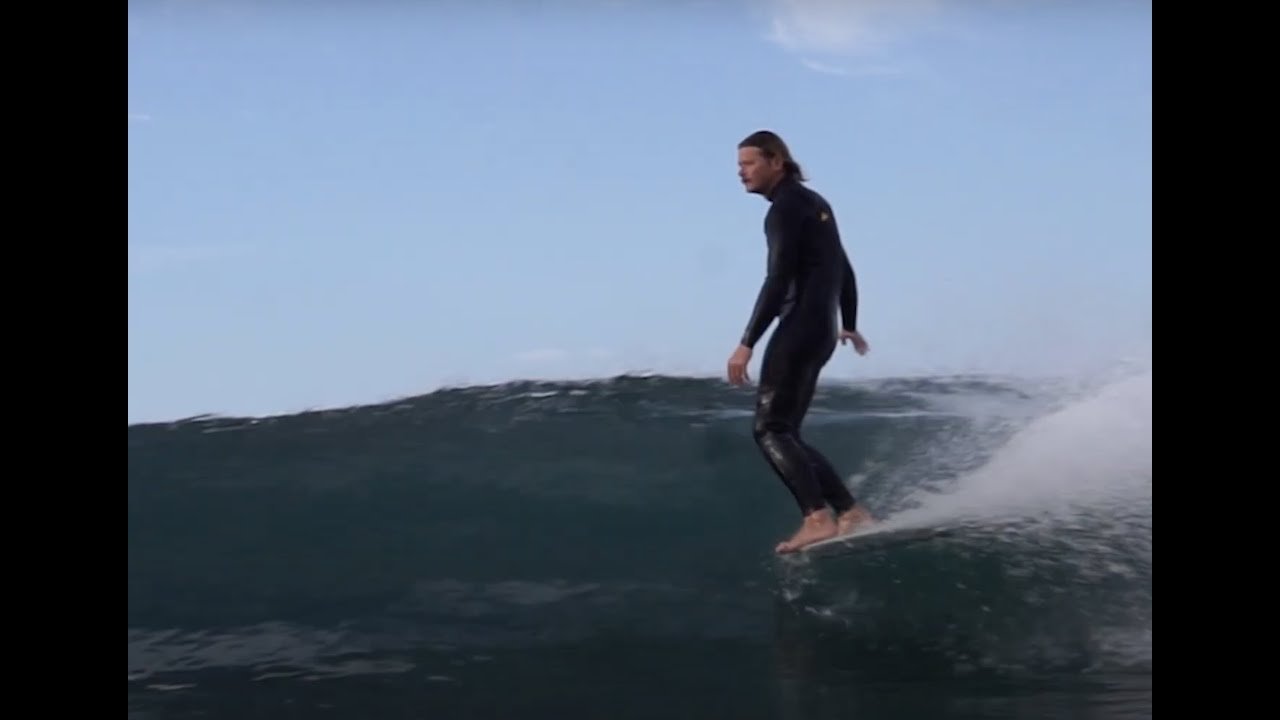
Key Takeaways & Tips
Wave Positioning is Paramount
For a stable nose ride, you must position your board in the middle to upper half of the wave face, staying close to the steepest part of the wave (the pocket). This maximizes the “tabling effect” of water hitting the board’s underside, creating lift.
Use the Breaking Lip for Lift
The lip of the wave breaking over the tail of your board acts as a counter-pressure, pushing the tail down and lifting the nose up. This seesaw effect is crucial for supporting your weight on the nose
Setup using the Fade Turn
To set up a ride going right, angle your board left during the paddle, then stand up and whip the board around to the right. This turn slows you down, keeps you in the pocket
Control Speed with the Stall
The stall involves applying weight and pressure to your back foot, acting like brakes
Angle your Front Foot to Open Hips
To facilitate an easier cross-step, angle the toes of your front foot slightly toward the nose. This opens your hips and knee, preventing your back leg from catching and allowing for a longer, smoother step forward
Engage the Inside Rail During the Cross-Step
When stepping forward, place your foot slightly off the stringer toward the inside rail (the rail touching the wave face). This pressure engages the rail, locks the board in, and greatly enhances stability and the tabling effect.
Practice on Land for Muscle Memory
Practice cross-stepping on land, using a wooden beam or visualized line, to build the muscle memory. This translates directly to quicker success and better body awareness when you get into the water.
Common Mistakes to Avoid
Noseriding too Low on the Wave
If you try to walk forward when your board is too low (down on the bottom third of the wave), it will be very unstable. You will either get sent out the back of the wave or immediately nosedive because there is not enough upward-moving water underneath the nose for lift.
Stalling Too Hard or Long
Applying too much pressure or holding a stall for too long will cause the wave to roll out from underneath you, resulting in you falling out the back. Experiment with light pressure to slow down or quickly tap the back foot to check your speed.
Dropping Flat-footed on the Cross-Step
Avoid coming down and immediately putting the outer side or heel of your foot down first. You want your toes and the pads of your feet to contact the board first, as this is what engages the inside rail and creates the crucial stability you need.