
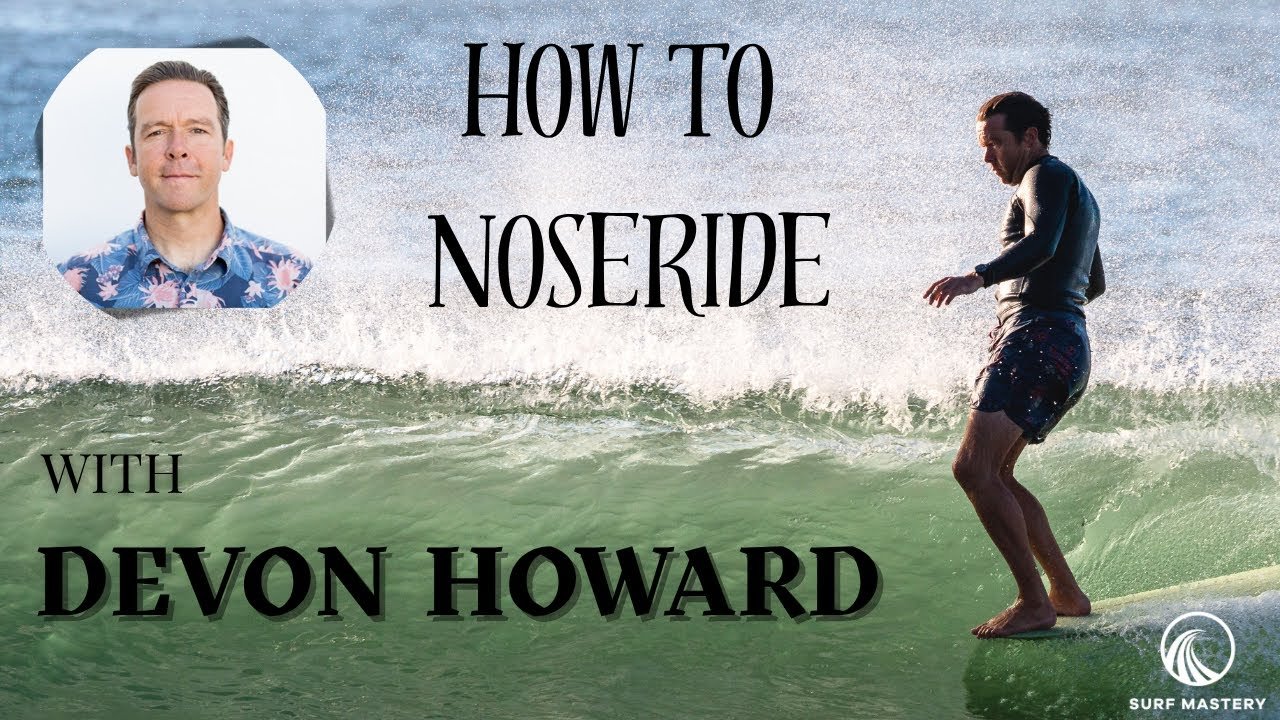
Longboard legend Devon Howard breaks down the nuances of noseriding, arguing that it is more a matter of balance and finesse than extreme power. The tutorial covers everything from ankle awareness and land practice to cross-stepping rhythm and correct positioning in the critical part of the wave.
Key Takeaways & Tips
Balance Training
Noseriding requires finesse and balance, starting with your ankles and toes. Land practice on a balance board (like the Chongo board) or simply walking a straight line on the floor wakes up the metatarsals and calves, preparing the body for the subtle movements required.
Weight Transfer on Walk
When cross-stepping, you do not want the weight of your body on the forward hip. You must lean back and shift the weight more onto your back hip (the trailing hip). This prevents you from falling forward when you complete the cross step.
Rhythm
The cross step requires a rhythm of transferring weight. After the first step, you are momentarily standing on one leg with all the weight in the back part of the body, and you quickly bring the other foot around in front. Four to six steps to the nose is considered technically proper noseriding [11:12].
Ideal Positioning
There is a misconception that you just run up to the front of the board. You must place your board high up into the pocket and the really steep part of the wave. The hydrodynamics of a nose-rider board work best when the board is high in the wave face [19:18].
Equipment (Single Fin)
For proper nose riding, a board designed for the purpose is essential, typically a longboard with a single fin (which holds better and acts as an anchor) and no edge (no release) in the tail. The clean rail allows the water to hug the rail and hold the tail down while you are on the nose [15:47].
Common Mistakes to Avoid
Riding the Flats
Do not try to nose ride on the mushy, flat part of the wave. This usually results in a “messy” nose ride where you are plowing water and trying to make something out of nothing.
Overweight Forward
Allowing all your weight to shift forward will cause the board to start sinking and plowing water. Only put weight forward if the board is stalling too much.
Lacking Faith
Walking up the board timidly or thinking, “I don’t want to fall,” often results in falling because you are so worried about not falling. You must go into the nose ride knowing and believing you will stand up there [21:31].
Flailing Arms
Flailing your arms around throws off your balance. Keep your upper body quiet and your hands low, allowing your feet and ankles to make the subtle adjustments [24:05].