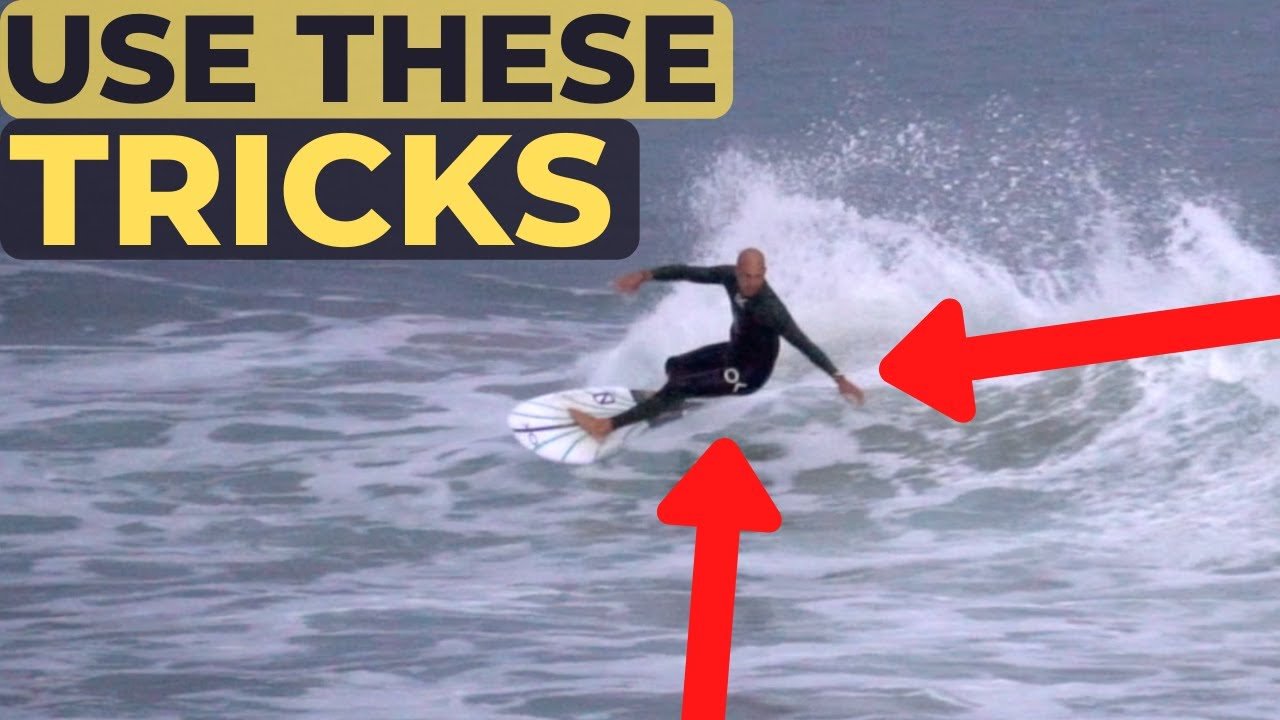
The cutback is one of surfing’s fundamental, yet most challenging, maneuvers. It’s the essential turn used to redirect your board back toward the breaking part of the wave. While there are quicker, more vertical turns called top turns, the Roundhouse Cutback is the ultimate power move—and no one executes it better than Kelly Slater.
In this in-depth analysis of the Goat’s technique, we break down the critical steps that separate an everyday turn from a radical, spray-throwing cutback.
Understand Your Cutback Type 1:44
Before you commit to a turn, you must quickly read the wave to determine which type of cutback is appropriate. This turn requires time and space on the wave face, making it the ideal maneuver when the wave is fat or moving slowly.
Top Turn Cutback
A more vertical maneuver used when the wave is moving fast and steep, or as a finishing move when the wave closes out
The Wrapping Roundhouse Cutback:
This turn requires more commitment and is best applied on a fat section of the wave where there is time to complete the full directional change
Lead With Your Eye Line 3:03
The first principle of any surf turn is simple: where you look is where you go. Kelly Slater’s vision acts as the blueprint for his entire arc. During the initial stage of the turn, his eyes lock onto the section of the wave he is aiming for (a nice, slopey lip), dictating the path of the board and body.
Initiate the Composed Bottom Turn 3:14
For the roundhouse, your approach to the bottom of the wave is critical and different from a top turn:
The Angle
Initiate a composed, more horizontal bottom turn. This allows the necessary space and arc for the full rotation to occur.
Compression
This turn does not require the deep, vertical compression needed for a top turn. A shallower, shorter bottom turn is all that is necessary to set the rail
Drive with Max Rail Engagement 4:17
To throw maximum spray and complete a powerful roundhouse, you need to drive all your weight into the rail throughout the arc. This requires balancing an extended body position with speed:
Off-Center Stance
Notice how Kelly’s body is positioned far off-center over the board, allowing for maximum rail engagement.
Heel Pressure
All his weight is driven down into his heels to force the board’s rail deep into the water.
Speed is Key
Completing such an extended turn requires a ton of speed, which must be generated from great positioning and a fast wave entry
Anchor and Rotate with the Lead Arm 5:27
Your left arm (if regular foot) or right arm (if goofy foot) is your anchor and guide. It is just as important as your eye line in completing the rotation:
Guide the Rotation
The lead arm guides the way into the full rotation of the body
Point Where You Go
In addition to looking, point where you want to go on the wave to guide the direction of the arc
Pull Through the Arc
For a completed turn, you must fully rotate the arm in a pulling motion against the direction of flow. This creates a torqued rotation, forcing the body to complete the turn
Exit
After the rotation, shift your weight back over to your toeside rail to smoothly transition back into the original direction of the wave
Remember this simple rule when approaching any section: The steeper the section, the more vertical you need to go. The fatter the section, the more horizontal (roundhouse) you need to go.