
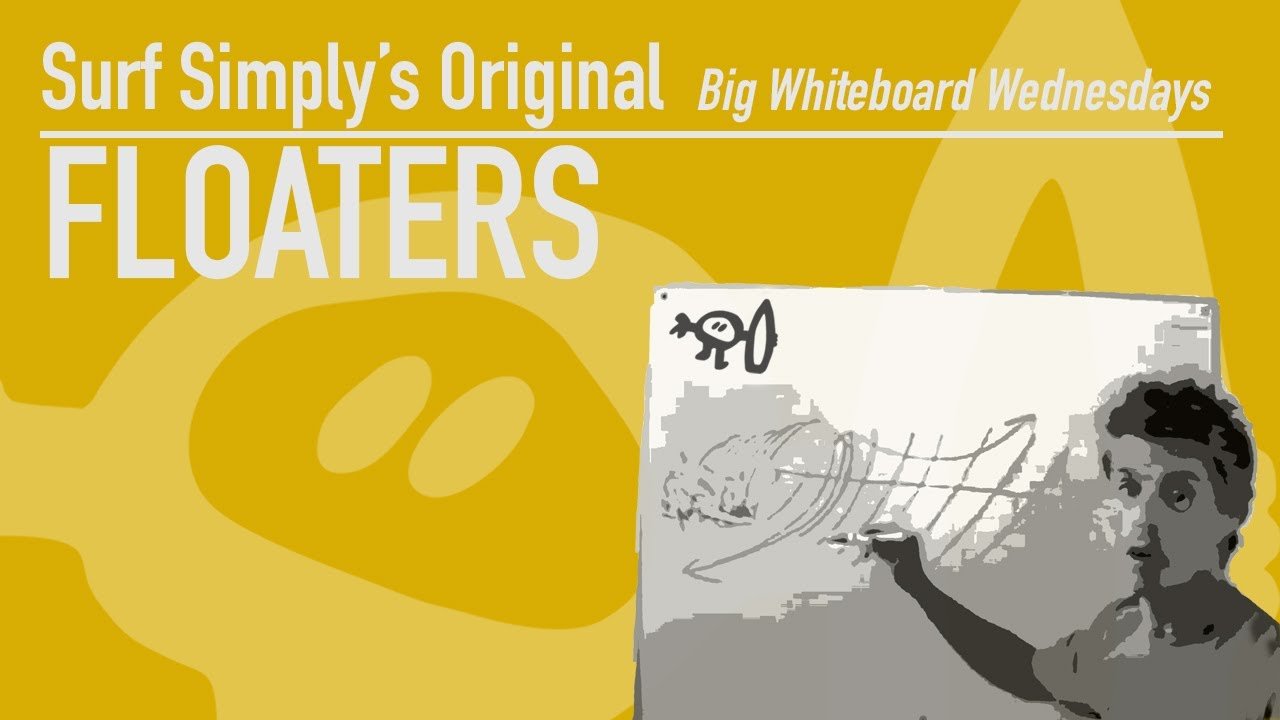
This tutorial addresses the first key maneuver for a Level 3 surfer: the floater. It focuses on the crucial difference between going over broken sections of a wave versus going around them. Going over the top dramatically maintains speed and increases the chance of making the wave, while the technique relies heavily on the correct body stance and timing.
Key Takeaways & Tips
Floater Purpose and Speed
The difference between going over a broken section and going around the bottom is one of speed. If you go around the bottom, you lose speed (e.g., 15 mph to 6 mph). If you go over the top, you maintain speed (e.g., 15 mph to 15 mph), giving you a much greater chance of making the wave.
The Approach Line
Point the board directly at the whitewater. You should come slightly down the wave face and then point your board back up towards the whitewater.
The “Wheelie” Technique
To get the nose up on top of the whitewater, you need to “throw your hands right up in the air” as you approach. This unweights your front foot, and the board will essentially do a “wheelie” up onto the whitewater, allowing the nose to clear the break.
Functional Stance is Key
This maneuver requires the functional stance (keeping your leading hand outside your heel rail). If both hands were on one side of the board and you threw them up, you would pull yourself over backwards and fall off the side.
The Exit
Exiting the floater is easier than getting onto it. All you have to do is point with your hands and your eyes back down the wave, and the whitewater will pull you back down. The whitewater is the most forgiving part of the wave and prevents you from catching a rail.
Common Mistakes to Avoid
Turning Down to the Flats
The most common mistake is instinctively turning the board and racing down onto the flats in front of the wave when a section begins to break, which is a major speed killer.
Nose Under the Whitewater
Do not allow the nose of your board to be underneath the whitewater. If it is, the breaking water will land on the nose and push the board down, causing you to fall off.
Starting Too High (Tipping Over)
When preparing to lift the nose, you must start nice and low (compressed). If you stand too tall, throwing your hands up will cause you to tip over backwards.