
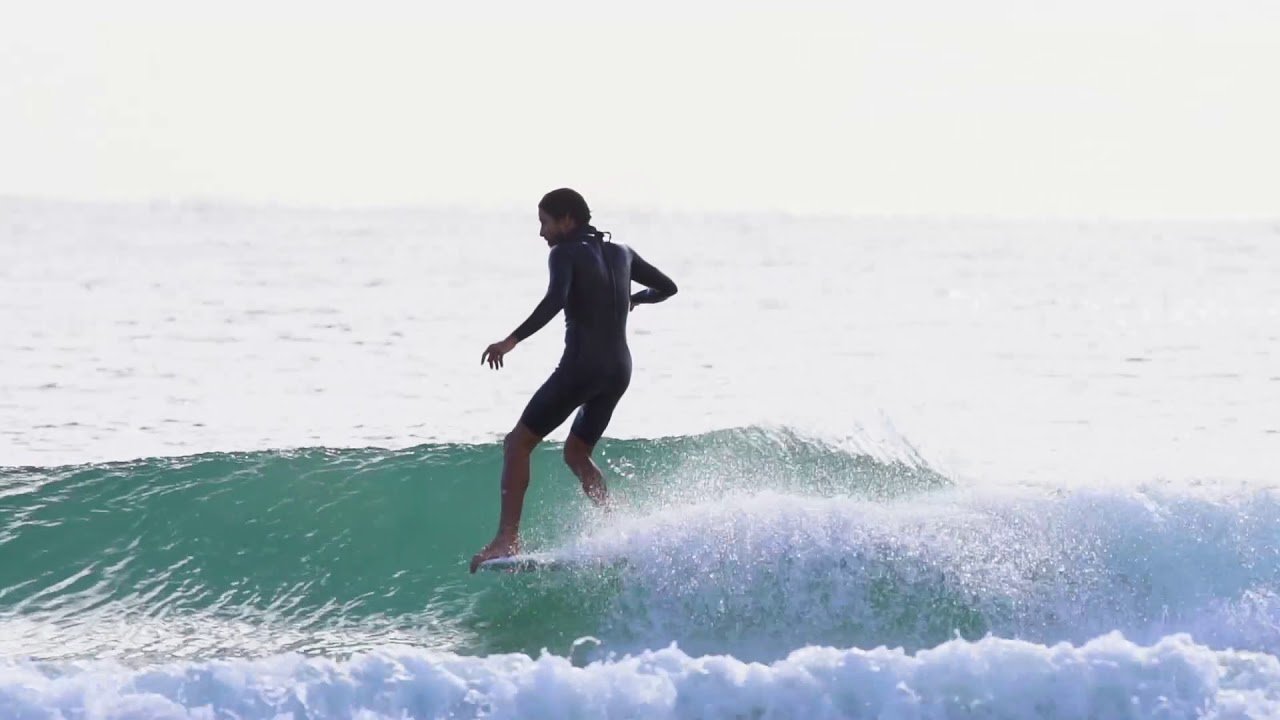
Two-time World Champion Beau Young breaks down the fundamental technique of the cross step. The lesson focuses on two key principles: maintaining centered weight throughout the process and ensuring the steps are slow, wide, and centered along the board for stability.
Key Takeaways & Tips
Step 1: The Initial Step
Once your body is angled and running along the wave’s face in trim, take one large, shoulder-width step, placing your back foot in front of your front foot. All your weight is now transferred entirely to this new front foot.
Weight Transfer
Keep your weight perfectly centered over your feet with your shoulders parallel to the board so that your board stays straight and stable. The back foot will have its heel up and only a minimal amount of weight on the toes.
Step 2: The Return Step
From your first cross step position, take one shoulder-width step forward (returning your feet to a level position). More weight should be placed on the back foot here, as you are now virtually on the nose.
Hang Five Stance
If you have reached the nose during the final step, rotate your foot parallel with the board and curl your toes over the nose to perform a hang five. Alternatively, you can go into a very low crouch called the cheater five by placing your backside on your back heel [2:36].
Practice
Practice this transfer of weight on the sand first until it feels completely comfortable. Your ultimate goal is to be able to walk all over the board, taking as many or as little steps as you wish.
Common Mistakes to Avoid
Hurrying the Steps
Do not hurry the process. The technique requires slow, wide, even, and centered steps to ensure balance.
Uncentered Weight
Failing to keep your weight perfectly centered over your feet will cause the board to become unstable and veer off your line.
Wasted Motion
Avoid wasting energy by moving your front leg far away from the back leg. A wide cross will allow you to travel up and down the board with fewer steps.