
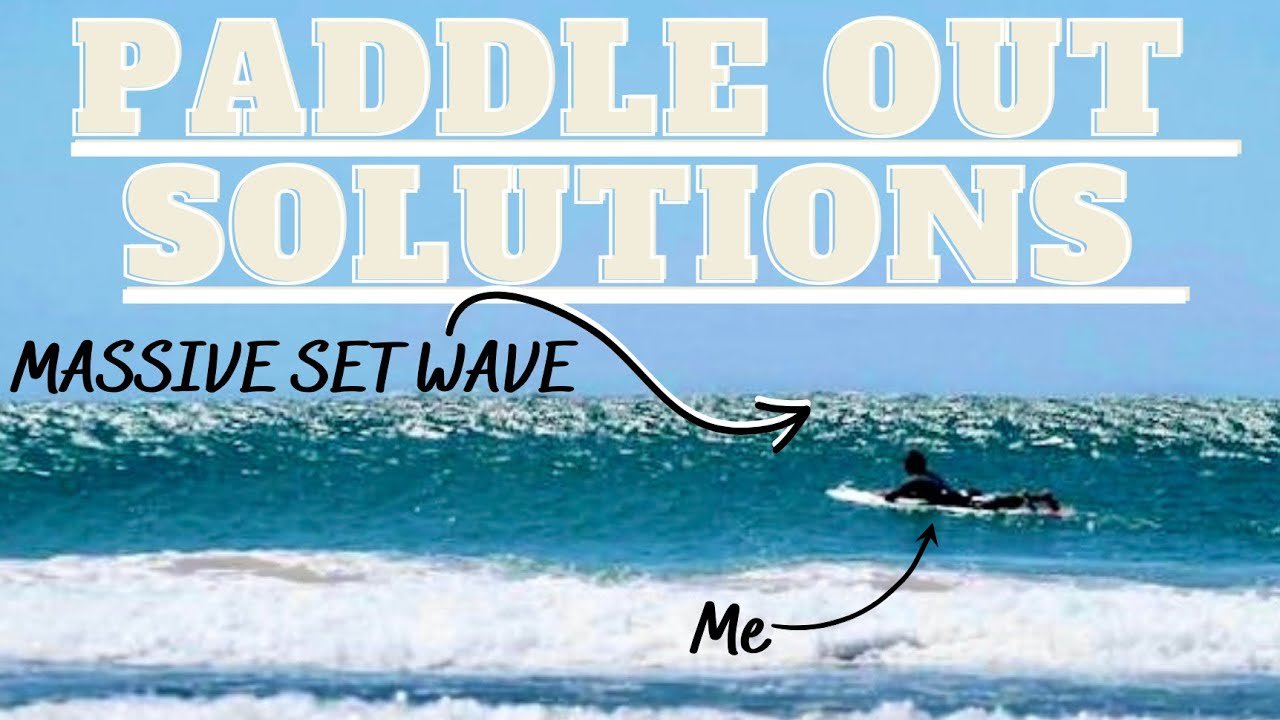
Paddling out in bigger waves is extremely challenging and often holds surfers back from progression. This tutorial delves into the key planning and technical components you need to be thinking about to ensure you are as effective and safe as possible when heading out into big surf.
Key Takeaways & Tips
Plan Your Channels and Rips
Before paddling, look for deep water channels or rips (a “cheat code”) that offer a better chance of getting out the back without going through as many breaking waves or whitewater.
Compensate for Sweep/Drift
If there is a strong sweep (lateral current), walk yourself down the beach past your intended paddle-out zone. This allows the sweep to naturally drag you into the ideal channel position by the time you are midway out.
Set Timing Strategy
Instead of waiting for the ocean to go flat (which risks getting caught by the next set), start paddling out initially when the last few waves of a set are rolling through. This gets you through the initial impact zone while the set is dissipating.
Press Up Method (Small Whitewater)
For small to medium whitewater (under 2–3ft), use the Press Up method. Press your chest up to allow the whitewater to rush between you and the board, minimizing the push-back.
Up and Over Method (Medium Waves)
For 3–3.5ft waves, sit on the back of the board to raise the nose. As the wave hits the bottom of the board, immediately shift your body weight forwards and up the board (grabbing the rails towards the nose) to counteract the flip motion and go up and over.
Eskimo Roll (Turtle Roll)
For fairly large whitewater, grab the rails near your chest and turn the board over to ride underneath the wave. Keep your arms bent to maintain a strong position (like a bicep curl) to steady the board against turbulence.
Common Mistakes to Avoid
Surfing Beyond Your Means
Do not surf waves beyond your experience level without the safety of an experienced friend who knows the conditions, where to paddle out, and the techniques to use.
Incorrect Board Angle
If the nose of your board is not facing directly towards the whitewater as you pierce through, the wave will flip you over or drag you further back, expending unnecessary energy.
Ignoring Body Position (Up and Over)
If you do not change your body position (shifting forward) during the Up and Over method, the whitewater will crash into the board’s underside and flip both you and the board backward.
Ditching Board Near Others
If you must safely dismount the board and dive deep, you must hold onto your board if anyone is within your leash’s zone. Everyone’s safety comes first.