
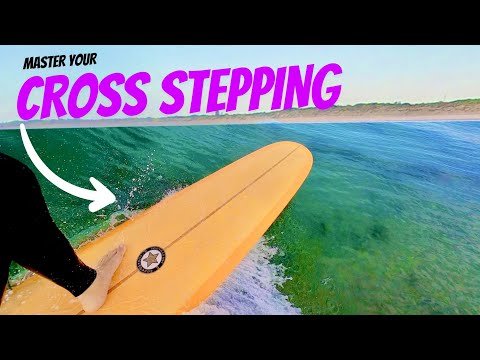
This tutorial, presented by a physiotherapist and surf coach, dispels common myths about cross-stepping balance. It argues that improving stability requires simple, effective adjustments—like adjusting your visual focus and line on the wave—rather than relying on complex, ineffective land drills.
Key Takeaways & Tips
The Real Balance Problem
The number one variable that will improve people’s cross-stepping is improving stability and the visual system, not complex balancing exercises on land. We need to focus on decreasing the challenge to our balance.
Eyes Up
Keep your eyes up and focused forward, not looking down to see where your next foot is going to land. You can use a checking system where you look down and back up quickly, but the eyes should primarily focus on what is ahead [4:36].
High Line Position
The best way to stabilize the board is to keep a high line across the wave. Engaging the inside rail and tracking higher will make the board more stable and help with the Coandă effect (the water sticking to the rail) [6:54].
Speed and Stability
Accelerating faster and going a little bit quicker creates more momentum, which makes the board more stable. Slower speed makes the board unstable [7:51].
Front Foot Accelerator
Think of the front foot as the accelerator. Lean more onto the front foot first to accelerate and establish a better connection of the board traversing across the wave face cleanly.
Practice
Practice the step and replace drill, where you accelerate, build speed, and then step back to the middle of the board and replace where that back foot was. This trains you to step into the most stable part of the board.
Common Mistakes to Avoid
Land Drills
Relying solely on complex, high-challenge land balancing drills (like closing eyes on an unstable surface) does not often translate to success in the dynamic environment of surfing.
Surfing the Bottom
Trying to cross step at the very bottom of the wave is extremely tricky because this is where you lose speed and are most off-balance. Always come higher on the wave to cross step.
Shuffling
Shuffling is a natural habit because it feels stable. To get rid of it, you must make the cross step position itself feel stable and comfortable to fight through that barrier.
Missing the Nose
Missing the nose is caused by rushing and not having the balance. Taking two really big steps from the tail (a jump/skip) is risky and is best reserved for advanced surfers [5:08].